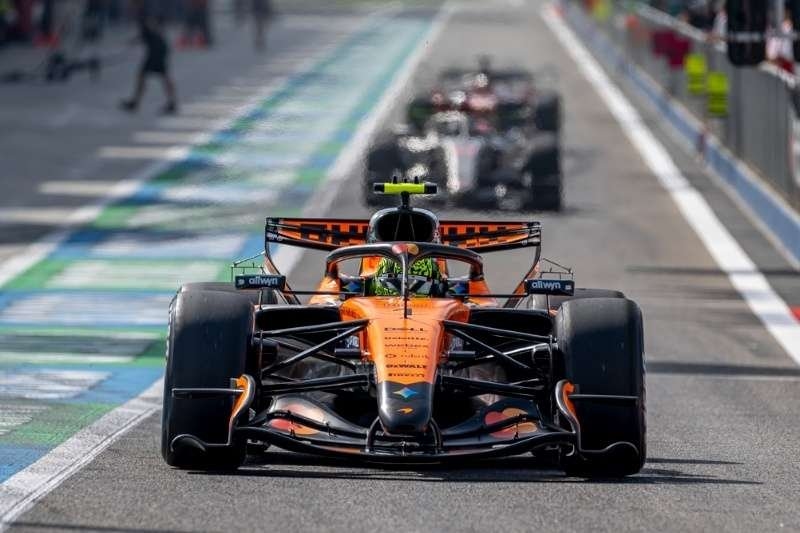
F1 Engine Components Used Throughout the 2026 Season

Quick Takeaways
- The 2026 F1 rules turned engine design on its head, especially when it comes to hybrid power and how teams recover energy.
- No matter who builds the engines, every F1 driver works off the same basic power unit setup.
- Still, reliability isn’t just nice to have—it’s absolutely crucial with a season as long as 2026.
- Energy recovery matters more than ever. It shapes how teams approach every lap, and it’s changed what it takes to win.
- If you want to understand why these engines are so complicated, you’ve got to look at every part—because performance in F1 isn’t just about who’s got the biggest engine anymore.
Modern F1’s all about getting the whole package working perfectly together. The new rules forced manufacturers to chase cleaner, more efficient power units, but without giving up the insane speed fans love. Every weekend is a tightrope walk: you have to think about energy recovery, reliability, fuel efficiency, cooling, and of course, pure speed—all at once.
This blog dives into the main F1 engine parts, how they interlock, and why they’re at the core of every team’s performance this season.
Understanding F1 Engine Components In The 2026 Regulations
Every modern Formula 1 engine is built around a hybrid F1 power unit, not just a traditional engine. Although manufacturers develop their own designs, every team follows the same FIA regulations covering the core F1 engine components.
For Formula 1 2026, the architecture still includes several mandatory systems working together. None operates independently. If one system loses efficiency, the entire F1 power unit suffers.
| Component | Primary Function | Why It Matters In F1 2026 |
|---|---|---|
| Internal Combustion Engine | Produces main engine power | Core performance and fuel efficiency |
| Turbocharger | Compresses intake air | Improves combustion efficiency |
| MGU-K | Recovers braking energy | Supplies electrical power |
| Energy Store | Stores recovered energy | Supports hybrid deployment |
| Control Electronics | Manages power delivery | Coordinates every system |
| Exhaust | Removes combustion gases | Influences engine efficiency |
| PU Auxiliary Components | Cooling and support systems | Maintain reliability |
Even though F1 drivers race for different teams, the core engine parts in every Formula 1 car stay basically the same—especially as we head into the 2026 season.
Formula 1 Engine Still Starts With The Internal Combustion Engine
Everything still starts with the internal combustion engine, or ICE. It’s right at the center of every Formula 1 power unit, producing most of the car’s mechanical muscle. The hybrid systems work with it, not instead of it.
For 2026, the big focus shifted from just raw horsepower to real efficiency. Teams zeroed in on things like fuel flow, how cleanly the engine burns that fuel, and squeezing out as much energy from every drop as possible.
The F1 Power Unit Depends On An Efficient Turbocharger
A huge part of that process is the turbocharger. It crams more air into the engine, letting the fuel burn harder and cleaner. In F1, these turbos spin at wild speeds and face crazy temperatures—nothing as you’d find in your average road car.
A responsive turbo in 2026 means drivers get smooth, fast acceleration, and teams lose less energy over a long race.
Don't Miss: F1 2026 Tech Regulations Transform Formula 1 Technology
The Hybrid Systems Define F1 2026 Performance

Hybrid technology shapes modern Formula 1 more than raw engine displacement. Several F1 engine components now exist mainly to recover, store, and then deploy electrical energy.
MGU K Makes Every Braking Zone Count
The MGU-K, or Motor Generator Unit Kinetic, converts braking energy into electricity instead of wasting it as heat. With more of the car’s performance coming from electric power now, squeezing every bit of efficiency out of these systems matters more than ever.
The F1 power unit constantly decides when energy should be harvested or released, depending on track conditions, battery level, plus driver demand.
Energy Store Keeps The Formula 1 Engine Competitive
Recovered electricity has little value unless it can be stored efficiently. The Energy Store acts as the battery system inside the F1 power unit. It collects electrical energy from the MGU-K before supplying it back during acceleration.
Manufacturers invest heavily here because better energy management improves consistency over an entire race rather than just one fast lap.
Also Read: Five Famous Japanese Grand Prix Battles in F1 History
Supporting F1 Engine Components Often Decides Reliability
Fans usually focus on horsepower. Teams often focus somewhere else. Reliability. Several F1 engine components rarely receive attention, yet they determine whether a car even reaches the finish.
Control Electronics Coordinate Every Formula 1 Engine Function
Control electronics functions as the brain of the Formula 1 engine. They monitor power delivery, hybrid deployment, fuel management, sensor information, plus safety systems simultaneously.
During Formula 1 2026, increasingly complex software became almost as valuable as mechanical engineering itself.
Exhaust Systems Do More Than Remove Gases
Then there’s the exhaust, funneling gases out and keeping airflow sharp and efficient. Small design improvements influence temperature management, turbo efficiency, plus long-term reliability.
Across an entire F1 2026 season, these gains become surprisingly valuable for both manufacturers and F1 drivers.
PU Auxiliary Components Keep Everything Working
Cooling systems, pumps, lubrication hardware, sensors, plumbing, plus numerous supporting assemblies fall under PU Auxiliary Components.
These parts rarely appear in television coverage. Yet if one fails, the entire Formula 1 engine may lose performance or stop completely.
Suggested Reading: F1 2026 Rules Explained: New Tech, Aero, and Overtakes
Conclusion
With the move to even more advanced hybrid tech, all the engine pieces are more connected than ever. The internal combustion engine is still the heart, but other parts like the turbocharger, MGU-K, energy store, control electronics, exhaust, and all those support systems—every single piece plays a role. Winning in 2026 is about getting every part of your system to work together, from sharp software to rock-solid engineering, not just piling on more horsepower.
FAQs
How Many F1 Power Units Can A Driver Use During One Season?
Drivers get a limited number of power unit parts for the whole season. If they go over, they get grid penalties. That’s why reliability is just as important as squeezing out a bit more speed.
Why Do Different Manufacturers Produce Different Performance Levels?
The rules set the main framework, but each manufacturer makes their own choices on things like combustion, software, cooling, turbo design, and overall packaging. These small engineering tweaks can lead to big differences on track.
Which F1 Engine Component Is The Most Expensive?
F1’s hybrid power units cost a fortune. Among the priciest individual pieces are the energy store, control electronics, and MGU-K—mainly because they use rare materials and demand crazy levels of engineering.
Can Teams Upgrade Their F1 Engine Components During The Season?
Teams do roll out upgrades and reliability fixes as the year goes on, but they have to stick to FIA rules and tight homologation limits. This keeps the playing field fair, at least on paper.
This content was created by AI