F1 Safety Car Rules Explained: Restarts and Strategy Guide

Key Takeaways
- The F1 safety car comes out whenever conditions on track get too risky for full-speed racing.
- A virtual safety car does the same job but without an actual car—drivers just follow a delta time.
- F1 safety car rules decide how the pack bunches up, when pit stops are allowed, and how restarts play out.
- Knowing the difference between a virtual safety car vs safety car scenario explains a lot of the strategy calls you see mid-race.
- Pit stops during a caution period cost way less time, which is exactly why teams pounce on that window.
Anyone who's watched a Grand Prix for more than a few laps has seen it happen—the field suddenly bunches up, overtaking stops, and commentators start talking strategy instead of lap times. That's the safety car at work. It's one of those things that looks simple on TV but actually runs on a fairly detailed rulebook. Fans following the Formula 1 Las Vegas Grand Prix know this better than most, since street circuits tend to bring these moments out more often. Here's how it all actually works, including restarts and strategy.
What is a Safety Car in F1?
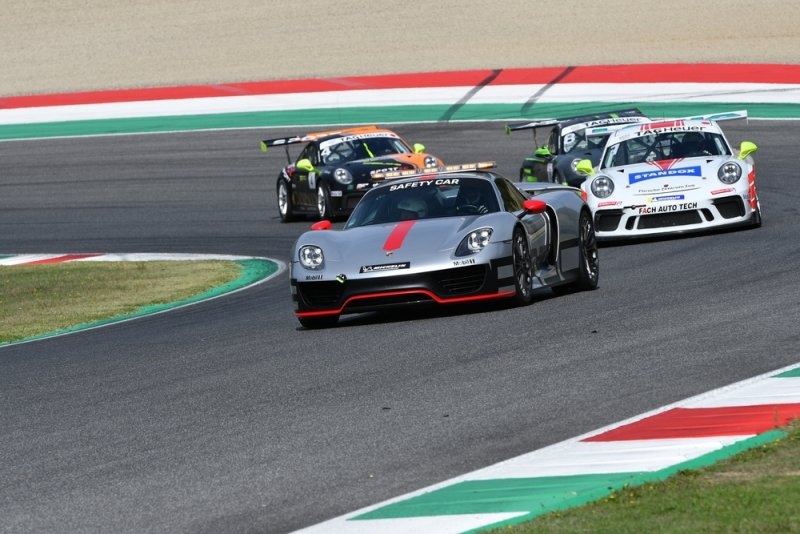
Basically, it's a road car—a proper high-performance one—sent out to control the pace after something's gone wrong on track. It leads the pack around at a much slower speed while marshals deal with debris or pull a stranded car to safety. Racing more or less pauses, but the gaps between drivers usually stay locked where they were.
Recommended read: F1 2026 Rules Explained: New Tech, Aero, and Overtakes
F1 Safety Car Rules Every Fan Should Know
There's a fair bit packed into the F1 safety car rules—how cars bunch together, when overtaking is off the table, and what's allowed in the pit lane during a caution. Break one of these and the stewards notice fast, so drivers tend to play it safe.
1. No Overtaking Behind the Safety Car
Once it's out, everyone holds position. Overtaking is banned outright, barring a few recovery exceptions, and drivers who push their luck usually end up with a time penalty for it.
2. Mandatory Bunching Before Restart
Lapped cars typically get waved through to unlap themselves first. That way, the leader restarts with a clean, tightly packed group right behind—no stragglers messing up the order.
3. Pit Lane Stays Open
Cars can still pit while the safety car's out, just under a strict speed limit through the lane itself. This is honestly where a lot of the interesting strategy calls happen.
Virtual Safety Car: How it Slows the Field?
Here's the thing about the virtual safety car—there's no actual car involved. Instead, every driver gets a delta time they can't beat through each marshalling sector on track. It slows everyone down without messing with the gaps between cars.
The system came in after a serious crash back in 2014, mainly so race control could react faster to smaller incidents that didn't need a full deployment. You'll see "VSC" pop up on trackside boards and the driver's steering wheel the second it kicks in.
1. Delta Time Enforcement
Cars have to stay above a set delta—roughly a third slower than normal pace—in every sector. Sensors around the circuit check compliance automatically, so there's not much wiggle room.
2. No Bunching Required
The field doesn't compress together as it does under a full safety car, so whoever's leading generally keeps their advantage more or less intact. It's a lighter-touch intervention, really.
Virtual Safety Car vs Safety Car: Key Differences
When people talk about virtual safety car vs safety car, it really comes down to how serious the incident is and how much control race control needs. Both slow things down, but they hit strategy in pretty different ways.
| Feature | Virtual Safety Car | Physical Safety Car |
| Deployment trigger | Minor incidents, debris, quick recoveries | Serious crashes, dangerous conditions |
| Speed control | Delta time per marshalling sector | Follows the actual car on track |
| Field bunching | Gaps stay roughly where they were | Cars compress into a tight pack |
| Pit stop time loss | Reduced, but still there | Cut down a lot compared to green flag racing |
| Restart complexity | Simple—no formation lap needed | Needs a proper formation lap and timing |
How do F1 Safety Car Restarts Work?
Once the track's declared clear, the safety car peels off into the pits at the end of a lap. From there, the race leader controls the pace all the way up to the restart zone near the start line.
1. Controlled Formation
The leader sets the tempo, weaving a bit to get some heat into the tyres, while everyone else stays bunched up tight. Jump the gun too early, and it's a penalty waiting to happen.
2. Green Flag Trigger
A green flag or light signal kicks the restart off, and suddenly it's back to full racing speed. These moments produce some of the wildest overtakes you'll see all race.
Why the F1 Safety Car Changes Race Strategy?
Neutralized laps squeeze the field together and shrink the time lost in the pits, which makes them prime territory for tyre changes. Teams that dive in straight away can jump rivals still stuck on worn rubber.
Strategists are constantly running the numbers the second a caution flag goes up—tyre wear, fuel, where rivals are on track. One well-timed call in this window can flip the whole podium picture by the checkered flag.
Also read: F1 2026 Tech Regulations Transform Formula 1 Technology
Conclusion
The F1 safety car, virtual or physical, ends up shaping races just as much as raw pace ever does. Once you understand the rules behind restarts, why it gets deployed, and how pit windows open up, those neutralized laps start feeling a lot less random. Next time the yellow flags wave, you'll actually know what's coming.
Frequently Asked Questions
What is a safety car in F1 used for?
It's sent out to slow the whole field safely after something goes wrong on track, giving marshals room to clear debris or recover a car. Overtaking's banned until conditions are properly safe again.
How is a virtual safety car different from a normal safety car?
A virtual safety car works through a mandatory delta time rather than an actual car leading the pack, so gaps stay roughly intact. A full safety car physically compresses the field together.
Can drivers pit during an F1 safety car period?
Yes—pit lanes generally stay open during both safety car and virtual safety car periods, though speed limits still apply. Teams often use this window since the time cost is much lower than usual.
Why do F1 safety car restarts sometimes cause crashes?
Cold tires after a long, slow period, combined with drivers eager to make up ground instantly, is a rough mix. It often leads to late-braking mistakes and contact once green flags come back out.
Does the safety car affect who wins a Formula 1 race?
It can, honestly, quite a lot—bunching up rivals, wiping out hard-earned gaps, or handing trailing cars a cheap pit stop. Plenty of races have swung entirely on safety car timing alone.
This content was created by AI