F1 Driver Salaries: What Top Stars Really Earn Today

F1 driver salaries always sound a little unreal at first. A person watches a driver fight through traffic at 200 mph, then later sees a report saying he earns more in one season than most people will see in a lifetime. Wild, yes, but Formula 1 is not an ordinary workplace.
The biggest names are not paid only for driving fast. They sell tickets, pull sponsors, bring media attention, help teams attract engineers, and carry a brand’s image around the world. That is why salary numbers can look so different from one side of the grid to the other.
Why are F1 Driver Salaries so Hard to Pin Down?
Reported F1 driver salaries are usually estimates because teams rarely publish full contract details. Some reports count only base salary. Others include bonuses, sponsorship-related income, or performance payouts. That is why one list may say Max Verstappen earns $70 million in 2026, while another puts his total 2025 on-track earnings at $76 million with bonuses included.
So, when fans compare salaries, they should read the small print. Is the number base pay? Is it total earnings? Does it include race wins, championship bonuses, or personal endorsements? F1 money is not always one clean paycheck.
What Usually Affects Driver Pay?
A driver’s pay can depend on:
- World titles and race wins
- Marketability outside racing
- Team budget and sponsor value
- Contract length
- Age, experience, and bargaining power
- Whether bonuses are included
A rookie may be quick, but a proven champion brings less risk. Teams pay heavily for that certainty.
Who are the Highest Paid F1 Drivers in 2026?
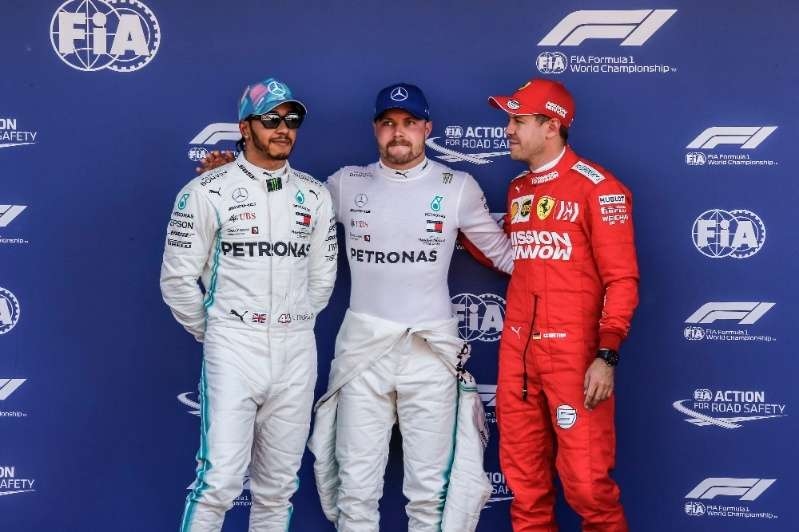
The highest paid F1 drivers are still the sport’s biggest names. RacingNews365’s 2026 estimate places Max Verstappen at about $70 million with Red Bull, Lewis Hamilton at $60 million with Ferrari, and Charles Leclerc and George Russell both at $34 million. Lando Norris follows at $30 million.
That list says a lot about modern F1. Winning matters, but timing matters too. A driver who signs a long deal at the right moment can lock in huge value. A younger driver may outperform a contract before renegotiation catches up.
The highest paid F1 drivers are also usually the ones who give teams something beyond lap time. Verstappen brings dominance. Hamilton brings legacy and global attention. Leclerc brings Ferrari loyalty and star power. Norris brings youth, speed, and commercial pull.
Lewis Hamilton's Salary and the Ferrari Factor

Lewis Hamilton's salary became an even bigger talking point after his move to Ferrari. RacingNews365 estimates Hamilton’s 2026 Ferrari salary at $60 million, while Forbes estimated his 2025 on-track earnings at $70.5 million when salary and bonuses were counted.
That difference shows why fans should be careful with numbers. One figure may be base pay for a season. Another may include bonus structures. Either way, Hamilton remains one of the most valuable drivers in the sport.
Why Does Ferrari Pay for More Than Speed?
Ferrari did not sign Hamilton only because he can still race hard. The team also gained a seven-time world champion with global recognition, luxury-brand appeal, and a fan base that follows him everywhere.
That is why Lewis Hamilton's salary makes sense from a business angle. Ferrari is not only buying race craft. It is buying attention, headlines, sponsor energy, and the hope that championship experience can help push the team closer to the front.
In Case You Missed It: Five Famous Japanese Grand Prix Battles in F1 History
How F1 Driver Contracts Actually Work?
F1 driver contracts are not simple employee agreements. They may include base salary, performance bonuses, image rights, sponsor duties, renewal options, exit clauses, personal sponsor rules, and sometimes strict fitness or media obligations.
A driver may earn extra for wins, podiums, points, or championships. Some contracts also reward constructor performance. That means two drivers with similar base salaries may finish the year with very different final earnings.
Some F1 driver contracts also protect teams. If a driver underperforms, teams may have options. If a driver becomes a star, the driver’s management may push for a better deal. It is racing, but it is also negotiation.
How Much do F1 Drivers Make Across the Grid?
When people ask how much F1 drivers make, the answer depends heavily on where they sit in the pecking order. At the top, salaries can reach tens of millions. In the middle, drivers may earn several million. At the lower end, newer drivers can earn far less, especially before bonuses or sponsorship value are considered.
Spotrac’s 2026 ranking also lists Verstappen at $70 million, Hamilton at $60 million, Leclerc and Russell at $34 million, and Norris at $30 million, broadly matching other reported base salary estimates.
The funny part is that a lower-paid driver can sometimes have a brilliant season. F1 is full of that awkward gap between current performance and old contract timing. That is where agents earn their money.
So, how much F1 drivers make is not only about talent. It is about leverage, timing, seat availability, sponsor appeal, and whether a team is desperate to keep or attract a driver.
F1 Driver Earnings Comparison Across Big Names
A fair F1 driver earnings comparison should separate base salary from bonuses. PlanetF1’s 2026 earnings report, based on salary plus bonuses, had Verstappen at $76 million, Hamilton at $70.5 million, Norris at $57.5 million, and Oscar Piastri at $37.5 million.
That version looks different from salary-only lists because McLaren’s drivers reportedly benefited heavily from bonuses. It is a useful reminder that winning, scoring consistently, and hitting contract targets can change the final number.
Read More: F1 2026 Tech Regulations Transform Formula 1 Technology
Conclusion
A driver with a lower base salary may close the gap if the team performs well. Bonuses can reward:
- Race wins
- Podium finishes
- Points totals
- Championship position
- Constructor results
- Personal performance clauses
That is why an F1 driver earnings comparison can shift by the end of a season. The number in January may not be the number everyone talks about in December.
FAQ
1. Do F1 Drivers Keep all of Their Reported Salary?
No, the number quoted is not necessarily what a driver personally retains. Taxes, management fees, training charges, legal assistance, travel-related preparations, and other professional expenditures may affect the ultimate take-home amount. Some drivers additionally organize income via firms or residence arrangements so the true personal income picture is more convoluted than the public statistics suggest.
2. Can a Rookie F1 Driver Earn More Than an Experienced Driver?
Yes, but it is not common unless the rookie brings unusual sponsor value, a major junior racing record, or signs during a moment when the team has limited options. Most rookies start lower because teams see them as less proven. Once they score points, beat teammates, or attract attention, their next contract can rise very quickly.
3. Does F1 Driver Salary Report Include Endorsements?
Normally when you see compensation figures, they’re about club pay or on-track earnings, not all outside sponsorships. Some wider wealth lists may include sponsorships, personal brand partnerships, licensing, or company revenue, but many F1 compensation tables don’t. This is how a driver on a reduced team wage may still make good money with watches, fashion, beverages, IT, or lifestyle partnerships.
This content was created by AI