What are Grid Penalties in F1 & How Can They Impact Races?

Formula 1 is a ruthless mathematical battle where breaking the rules guarantees brutal consequences. When teams or drivers cross the line, the FIA does not hesitate to destroy their starting position. Nobody wins a world championship by constantly eating heavy grid penalties and fighting through the back of the pack.
Understanding the hierarchy of these punishments is the only way to realize why a driver who qualifies on pole might start at the very bottom on Sunday.
This guide breaks down the tactical reality of F1 penalties and how they dictate the flow of a race.
Must Read: F1 2026 Tech Regulations Transform Formula 1 Technology
What are Grid Penalties in F1?
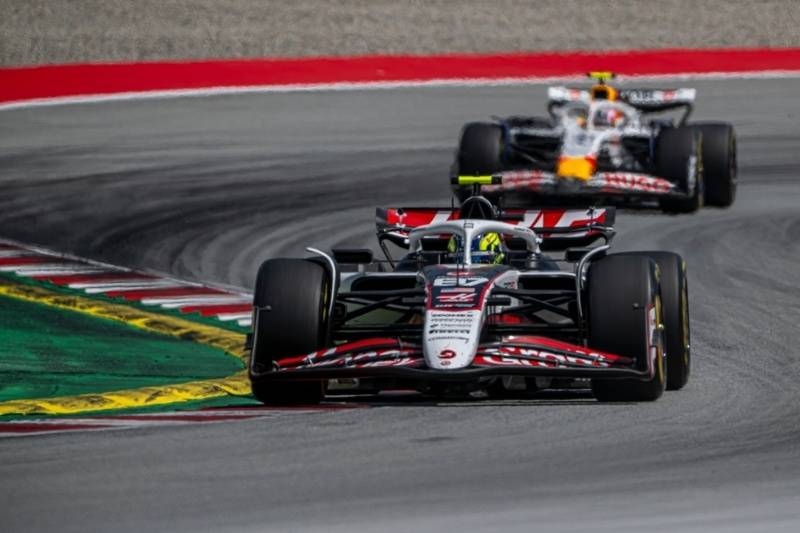
Grid penalties are the ultimate disruptor of a clean race weekend. Effectively, these are demotions applied to the final starting order after qualifying has ended. If a driver executes a flawless lap and qualifies in P3 but carries a five-place grid penalty, they are forced to line up in P8.
This isn't just about a change in position; it is a total destruction of their planned race strategy. Starting further back forces a driver into "dirty air," which overheats tires and kills downforce, making it significantly harder to climb back into the points. Teams have to calculate if the mechanical advantage of a fresh engine is worth the physical disadvantage of starting behind twelve slower cars.
Different Actions Behind F1 Penalties
You can check the following list to understand the different actions behind F1 penalties:
1. Exceeding Power Unit Component Limits
Every car is restricted to a set number of engines, turbochargers, and MGU units per season. If a team installs an extra part beyond that limit, the stewards impose a heavy penalty on the driver.
2. Gearbox Replacements
Gearboxes must last for a specific number of consecutive events. If a team has to swap a gearbox early due to a mechanical failure or a crash, the driver typically eats a five-place grid drop.
3. Impeding Other Drivers
Space is a luxury during qualifying. If a driver sits on the racing line while on a slow lap and blocks someone on a hot lap, the stewards will almost always hand out a three-place penalty. It is a punishment for poor situational awareness.
4. Parc Ferme Violations
Once qualifying starts, the cars are under "Parc Ferme" conditions, meaning teams cannot change the setup. If a team panics and changes the suspension or wing settings overnight, the driver is forced to start from the pit lane, which is even worse than a standard grid drop.
5. Unsafe Releases
If a team lets a driver out of the garage or a pit box directly into the path of another car, it creates a massive safety risk. While often resulting in a time penalty, repeated or severe infractions during a weekend can lead to a demotion on the starting grid.
Top Pick: F1 2026 Rules Explained: New Tech, Aero, and Overtakes
How Many Penalties are There in F1?
You can refer to the following list to understand how many penalties there are in F1:
1. 5-Second Time Penalty
This is the basic tool. It is usually given for minor track limit violations or slight contact. The driver serves it during their next pit stop while the mechanics stand there like statues.
2. 10-Second Time Penalty
Reserved for more aggressive mistakes. If a driver forces another car off the track or causes a mid-level collision, they get hit with this. It is a massive blow because ten seconds in F1 is an eternity.
3. Drive-Through Penalty
This is a mid-race execution. The driver must drive through the pit lane at a restricted speed (usually 80km/h) without stopping. It usually costs about 20 to 25 seconds, depending on the track layout.
4. 10-Second Stop-and-Go
This is the harshest in-race penalty before a black flag. The driver enters the pits, stops for ten seconds while the mechanics stand with their hands behind their backs, and then leaves. It ruins a race instantly.
5. Grid Drops (3, 5, 10, or Back-of-the-Grid):
These are the pre-race punishments. As mentioned, hitting that 15-place threshold sends you straight to the basement of the starting order.
6. Black and White Flag
This is the official warning. It’s the "yellow card" of Formula 1. One more mistake after this flag usually results in a time penalty.
7. Black Flag
This means it is a total disqualification. The driver is ordered to return to the pits immediately and is removed from the race results. This is rare and reserved for dangerous or unsportsmanlike conduct.
Why Did Yuki Get a 60 Grid Penalty?
You can refer to the following list to understand why Yuki got a 60 grid penalty:
1. Massive Power Unit Overhaul
VCARB decided to replace every single core component of Yuki’s power unit at the same time to build up a "pool" of fresh parts for the rest of the season.
2. 10-Place Rule
For every "first" extra component used (the 5th engine, for example), a 10-place penalty is applied. If they take a second extra component of that same type later, it’s a 5-place penalty.
3. Component Breakdown
Yuki took his 5th Internal Combustion Engine (10), 5th Turbocharger (10), 5th MGU-H (10), 5th MGU-K (10), 3rd Energy Store (10), and 3rd Control Electronics (10).
4. Practical Result
Under F1's sporting regulations, if a driver exceeds 15 places in penalties, the specific number ceases to matter—they are simply moved to the "back of the grid.” The 60-place figure is just the technical total of the infractions.
Conclusion
F1 is a brutal mathematical chess match, and grid penalties are the ultimate disruptor of the status quo. Teams have to balance pushing their hardware to the absolute limit without triggering a heavy intervention from the FIA. Understanding exactly how the stewards enforce these rules stops the confusion when the starting grid completely flips on a Sunday morning.
Frequently Asked Questions
1. Is There a 20 Second Penalty in F1?
Yes, it exists, but it's rare. Stewards save the 20-second hammer for when someone really screws up, like blowing off a drive-through or driving like a total maniac without getting the black flag. It's basically a death sentence for your race results.
2. Can a driver appeal a grid penalty?
Good luck with that. Most in-race stuff is final. Teams can try to fight a grid drop if they find some "magic" data that changes the story, but the FIA almost never backs down once the grid is set in stone. Usually, you just have to eat the loss and move on.
3. What happens if two drivers have back-of-the-grid penalties?
It comes down to who was faster on Saturday. If two guys get sent to the absolute back, the one who put in the better qualifying lap starts ahead of the other. They basically fight for the "best of the worst" spots at the tail end of the field.
This content was created by AI