F1 vs IndyCar: Which Racing Series Is Faster?

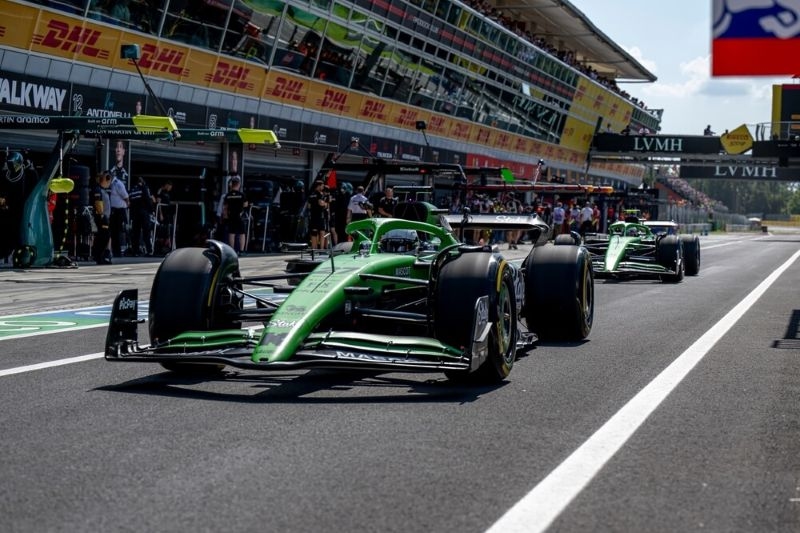
Ask racing fans which series is faster and the argument starts quickly. One person brings up Formula 1 lap times. Someone else talks about Indy 500 qualifying speeds. Then another person says, “Yes, but what kind of track?” And honestly, that person is right.
The F1 vs IndyCar question depends on what “faster” means. Faster in a straight line? IndyCar has a serious case, especially on big ovals. Faster around a twisty road course? Formula 1 usually looks untouchable because of braking, downforce, and corner speed.
In 2026, the comparison has become even more interesting. Formula 1 has entered a new rules era with active aero, a stronger electric side to the power unit, and revised racing terms like Overtake Mode and Boost Mode. F1 says its 2026 cars use about a 50-50 power split between internal combustion and electrical power, with active aero shifting between Straight Mode and Corner Mode.
F1 vs IndyCar: Which Series Has The Higher Top Speed?
If the question is pure straight-line speed, IndyCar is the easy answer in the right setting. On superspeedways like Indianapolis, IndyCars can go past 230 mph in qualifying trim. For the 2026 Indy 500, Alex Palou took pole with a four-lap average of 232.248 mph, and IndyCar’s own Fast Friday coverage described cars topping 240 mph before qualifying weekend.
That is why the Formula 1 speed comparison needs context. F1 cars are extremely fast, but they are not built only to chase the highest number on a speed trap. They are built to brake later, corner harder, change direction faster, and use aerodynamic grip in ways IndyCar does not.
So yes, an IndyCar can be faster in a straight line at Indianapolis. But no, that does not automatically make it faster everywhere.
Why F1 Usually Wins On Road Courses?
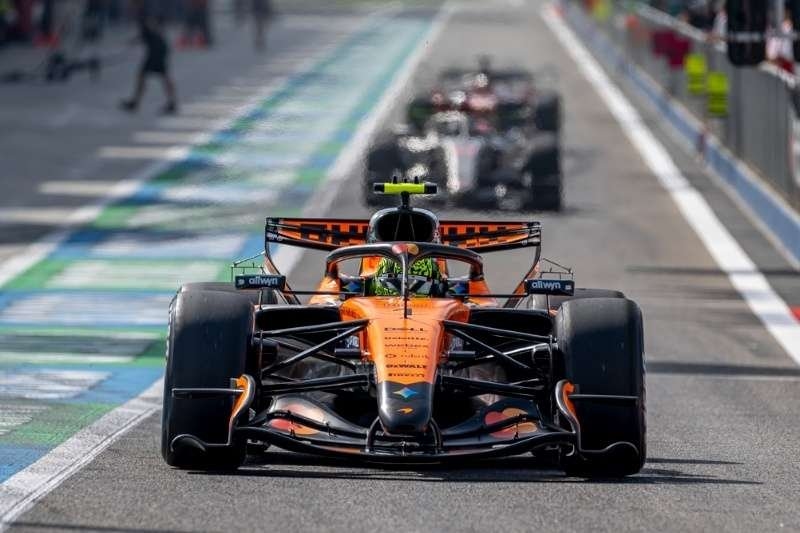
Extreme precision tools are used to make F1 vehicles. Everything is planned around downforce, braking, tyre behavior, energy deployment, cornering grip. Even with the 2026 rule changes, F1 is still a succession of teams building their own cars and spending much to get performance details inside the regulations.
That’s the crux of the IndyCar versus Formula 1 tech discussion. F1 teams design their own chassis, aerodynamics, suspension ideas and power-unit partners. IndyCar has a more unified car concept, which helps keep costs down and keeps the race tighter.
On a road course with braking zones, fast corners, and technical sections, F1 normally has the advantage. It can carry more speed through corners and stop with frightening confidence.
The Corner Speed Difference
This is where fans sometimes underrate F1. Top speed looks dramatic on TV, but lap time is often made in corners and braking zones. An F1 car may not hit Indy 500 speeds, but it can gain huge time by slowing down later and getting back to throttle earlier.
Why IndyCar Looks Wild On Ovals?
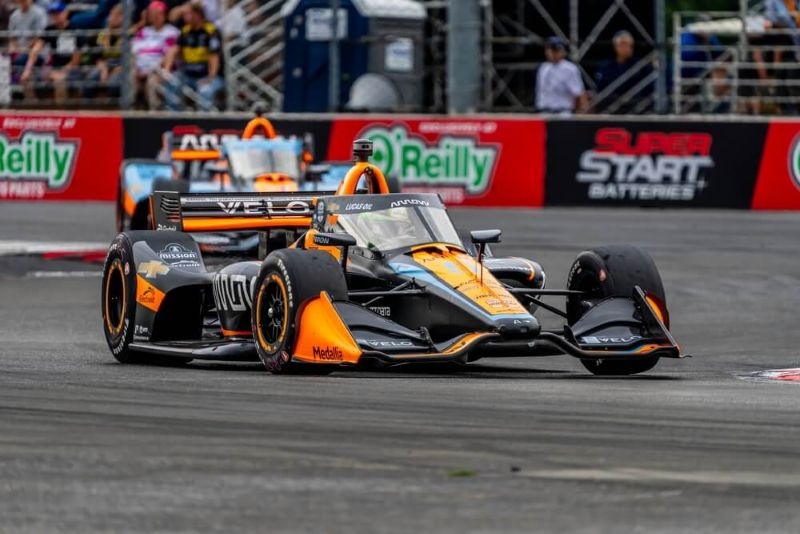
IndyCar has its own kind of madness. Watching cars run inches apart at more than 220 mph on an oval is not something Formula 1 really offers. The speed feels raw. The margin for error looks tiny because it is tiny.
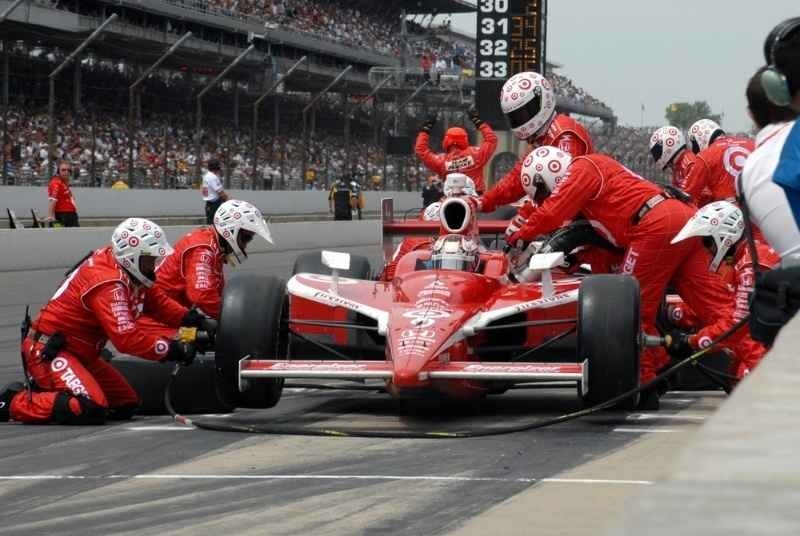
The Indianapolis 500 is the obvious example. The cars run low-drag setups, drivers use slipstreams, and tiny setup changes can decide whether a car feels planted or nervous. That is where IndyCar earns its reputation as one of the fastest racing series in the world.
IndyCar is also less separated by car design. Since the cars are more similar, the driver, setup, pit strategy, and race craft become even more visible. Sometimes the racing feels less like engineering warfare and more like a long, tense street fight at high speed.
Related Resource: F1 2026 Rules Explained: New Tech, Aero, and Overtakes
Technical Differences That Shape The Speed
The biggest Technical differences come from philosophy. F1 is a constructor championship. Teams build and develop their own cars. IndyCar is more spec-based, meaning the car platform is more controlled.
That changes everything.
F1 focuses on:
- Custom chassis and aero development
- Hybrid power-unit complexity
- Active aerodynamics in 2026
- Extreme braking and cornering
- Team-by-team design battles
IndyCar focuses on:
- Closer car performance
- Oval, road, and street course versatility
- Lower costs than F1
- Driver race craft in similar machinery
- High-speed oval setups
This makes the motorsport comparison more interesting than a simple winner-loser answer. F1 is more technically extreme. IndyCar is more varied in track style and often closer in competition.
2026 Technology Changes In Formula 1
Formula 1’s 2026 rules changed the conversation. DRS is gone in the old sense, replaced by new active aero concepts and overtaking energy tools. Reuters reported that Formula 1 introduced new terms for 2026 including Boost, Overtake, Recharge, and Active Aero, with cars redesigned around a 50-50 hybrid split and sustainable fuel.
That means F1 is still pushing technology harder than almost any racing category. The cars are not just fast. They are experiments in efficiency, energy recovery, aerodynamic control, and driver management.
This is why IndyCar vs Formula 1 technology usually favors F1 in complexity. IndyCar is advanced too, but F1 is built around constant technical development.
Where IndyCar Still Has The Edge?
IndyCar’s edge is not in having the most complicated car. Its edge is variety and spectacle. One season includes street circuits, permanent road courses, short ovals, and superspeedways. Drivers have to adapt constantly.
That is not easy. A driver who is fast at Long Beach still has to survive Indianapolis. A driver good on ovals still needs to handle bumpy street circuits. That range makes IndyCar brutally demanding in a different way.
For fans who love pure speed, the Indy 500 is hard to beat. For fans who love precision and technical perfection, Formula 1 usually wins.
The Driver Challenge Is Different
F1 drivers deal with extreme G-forces, tire management, hybrid systems, and surgical cornering. IndyCar drivers deal with closer racing, less power steering comfort, oval risk, and more physical unpredictability. Neither is easy. They are just hard in different accents.
Which Is The Fastest Racing Series In 2026?
If “fastest” means top speed, IndyCar has the stronger claim, especially at Indianapolis. If “fastest” means lap time around most road circuits, Formula 1 is usually ahead. If “fastest” means most technically advanced, F1 wins comfortably. If it means closest racing at huge speeds, IndyCar has a strong argument.
That is why F1 vs IndyCar never has one clean answer. The track changes the answer. The definition of speed changes the answer.
For a clean Formula 1 speed comparison, the simplest version is this: IndyCar is faster on big ovals, while F1 is faster around technical circuits.
Read More: Five Famous Japanese Grand Prix Battles in F1 History
Final Thoughts
The fastest racing series depends on what kind of speed matters to the fan. Formula 1 is sharper, more advanced, and usually quicker through corners. IndyCar is rawer, faster on superspeedways, and often more unpredictable in traffic.
Both are brilliant. F1 feels like a science lab moving at race speed. IndyCar feels like a knife fight at 230 mph. That is probably why comparing them never gets old. For anyone looking at Technical differences or a true motorsport comparison, the better question is not “which is better?” It is “which kind of fast do you love more?”
FAQ
1. Could An IndyCar Beat An F1 Car On A Straight Road?
Yes, in the right setup, an IndyCar could beat an F1 car for top speed, especially if the comparison is based on superspeedway trim. IndyCars are designed to go very fast on ovals with low drag configurations. But if the straight road included hard braking, curves, or abrupt changes of direction, the F1 vehicle would certainly regain the lead very quickly.
2. Why Does F1 Feel Slower When IndyCar Has Higher Top Speed?
The vehicles accelerate, stop and turn with such acute crispness that F1 frequently seems quicker. The camera doesn’t always do it justice, but it’s all about how late the driver is braking and how much speed the vehicle is carrying around the corner. On ovals, IndyCar may appear quicker. On road courses, F1 can look more ferocious, more accurate.
3. Is IndyCar More Competitive Than Formula 1?
Yes, often. IndyCar is usually significantly tighter racing since the vehicles are more comparable and the budgets are much less than F1. In Formula 1 the performance discrepancies are larger since teams build their own cars and a good design may dominate. IndyCar may lack the same technical pizazz but it may provide more surprise wins and closer races.
This content was created by AI