Which are the Most Expensive F1 Cars Ever Sold in History?

Some of the most expensive F1 cars are more than just race cars; they're pieces of racing history. In the world of motorsport, Formula 1 remains the ultimate competition, and some of the classic machines that carried world champions to victory often fetch astonishing sums at auction. It's not uncommon to see historic F1 cars selling for well over $10 million in the past decade, with some cracking the $20 million mark due to their racing provenance, rarity, and links to legendary drivers.
Collectors pay these astronomical amounts because these cars are often the ones that witnessed key moments in motorsport history, and with a range from championship-winning Ferraris to iconic Mercedes Silver Arrows, the market for vintage F1 cars shows no sign of slowing down. Here, we look at some of the most valuable and expensive Formula 1 Grand Prix Racing Cars, what makes them so sought-after, the most expensive F1 car in the world, and which machine currently holds the record for the most expensive F1 car on public auction.
What Makes F1 Cars Standout from Other Cars?
It goes without saying that not every F1 car becomes a multi-million-dollar collectible, but there are specific reasons why some cars command such high figures. The first of these is, obviously, success, so cars that have been successful enough to win championships or a number of significant races are in very high demand. Then comes the connection with a famous driver; the more world champions who have driven that specific machine, the higher the price goes. This also ties into the rarity factor, as fewer historic F1 cars survive in the same condition as they were on race day. All of these things add up to create a market where priceless racing cars are highly collectible. Here is the list of F1 cars that are expensive:
Mercedes-Benz W196 R (1954)
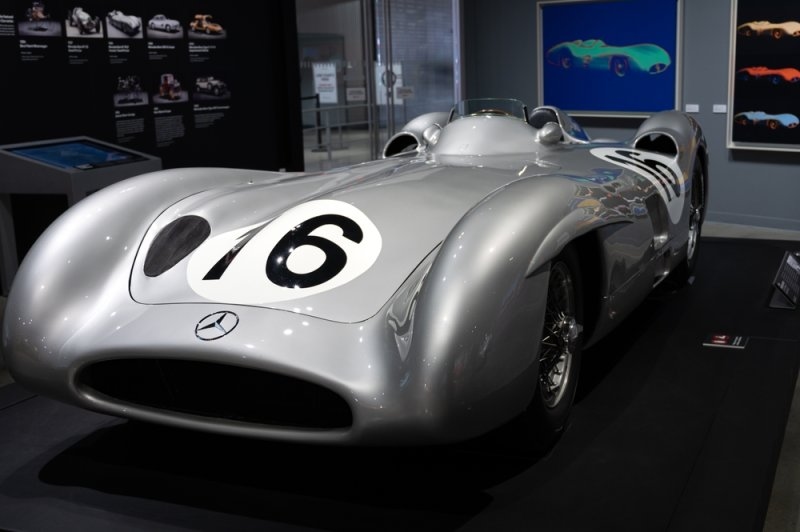
When discussing the most expensive F1 cars, the Mercedes-Benz W196 R inevitably comes up. This was driven by five-time world champion Juan Manuel Fangio. During the mid-1950s, it was a dominant Force in Formula 1, with its state of the art engine that used fuel injection and a streamlined body, the W196 really changed the game for Grand Prix racing. One of these models sold for an astounding $29 million, making it the most expensive F1 car ever sold at public auction, simply because it has it all: historical significance, track success, and rarity.
Mercedes-Benz W196 Streamliner (1955)
It's no surprise that the streamlined variant of the W196 makes our list, as it's one of the most recognizable racing cars in history. This streamlined body was built with a particular purpose in mind: to conquer high-speed circuits. Only a limited number were ever made, making surviving examples exceedingly rare and a significant part of the success and pedigree that Mercedes-Benz had in the 1950s.
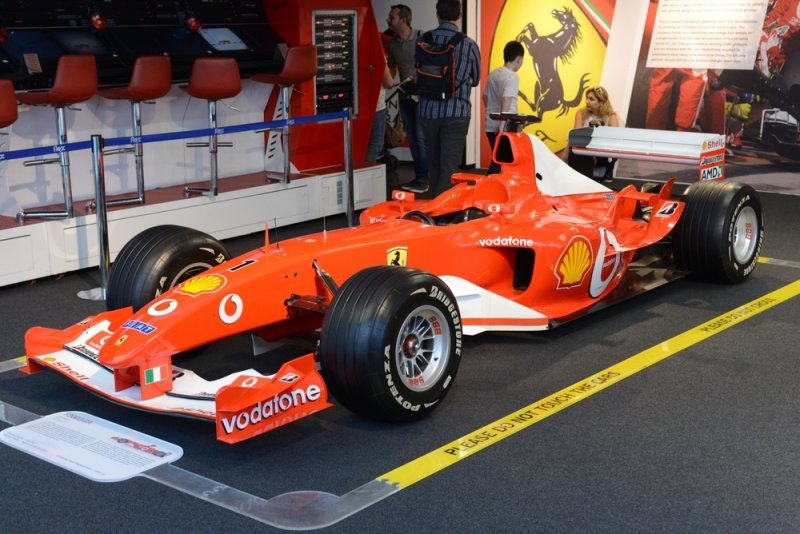
Ferrari F2003-GA (2003)
The Ferrari F2003-GA is, quite simply, the pinnacle of Ferrari's Formula 1 racing in the early 2000s. This was the car in which Michael Schumacher sealed one of his seven championships and secured multiple race victories for the Maranello team; Schumacher is widely recognized as the best Formula 1 driver ever. Therefore, any car associated with one of his championships will be extremely valuable and seen as one of the safest motorsport investments.
Ferrari F2001 (2001)
Like the F2003-GA, this Ferrari is another of Michael Schumacher's championship-winning cars and another of the fastest Formula 1 cars ever built. The F2001 won both the Drivers' and Constructors' championships for Ferrari, as part of one of the most dominant periods of success in Formula 1, and with it still considered to be one of the greatest Formula 1 cars of the modern era, it commands a colossal price at auction.
Ferrari F2002 (2002)
This Ferrari F2002 is considered one of the greatest ever by both engineers and racing fans. Reliability and pure performance were second to none when Ferrari launched this Formula 1 car, and it helped them to a dominant championship-winning season, so it is really no wonder that collectors worldwide would pay for a car of this caliber.
McLaren MP4/8 (1993)
Arguably the most popular Formula 1 driver in history, Ayrton Senna has had some fantastic cars throughout his illustrious career, but for some reason, one that tends to fetch enormous sums at auction is the McLaren MP4/8. The Senna factor plays a massive role here, as despite competing in one of the strongest eras of Formula 1 racing, the great Brazilian managed to triumph in this car on multiple occasions.
Ferrari 312T4 (1979)
This is another Ferrari from a successful championship-winning season. Driven by Jody Scheckter during his World Championship year, the 312T4 is one of the most famous and historical Formula 1 cars of all time and an iconic part of Ferrari's racing past.
Why does Ferrari Dominate the Market?
The quick answer to this is quite simply legacy. Ferrari has been at the forefront of Formula 1 for over half a century and a part of that history, a part that enthusiasts and collectors alike are eager to acquire for themselves. With a passionate global fanbase and championship success on numerous occasions, a Ferrari can truly be seen as the centerpiece of any collector's collection, thanks to the Italian manufacturer's continuous commitment to the sport.
Try This: Formula 1 Reels In $887M In Q3 Ahead Of Las Vegas Grand Prix
What Makes An F1 Car Expensive?
There are several factors that lead to it ranking as the most expensive car. Here are the following reasons:
Racing Success
Formula 1 cars with winning credentials will naturally be far more desirable to collectors, particularly those that have won a championship or multiple high-profile races.
Driver Legacy
Cars driven by iconic figures in motorsport will command significantly higher prices than similar cars with a less renowned past.
Originality
Buyers will pay considerably more if a car is fully authentic, with all original parts present and verified racing history.
Rarity
Formula 1 cars in pristine condition are extremely rare, making those available highly sought after. It is what makes it unique and expensive.
Could More Records Be Broken In The Future?
Yes, most likely. Formula 1 is becoming a bigger worldwide sport, and therefore, more people want a part of its history; the cars that future legends such as Lewis Hamilton and Max Verstappen will drive could, in theory, smash today's records. The history of certain cars, however, such as the original Mercedes-Benz W196 R, will forever be incomparable.
Must Try: Formula 1 Expected To Bring In Over $1 Billion To Las Vegas
Conclusion
Expensive F1 cars are not mere purchases of luxury; they are tangible pieces of motorsport history and engineering marvels that are appreciated worldwide. From the Fangio-driven Mercedes to some of Schumacher's champion Ferraris, these cars have witnessed and participated in moments of history that fans simply want to own.
Formula 1's rise to prominence may have given us the incredible machines of today, but it's the classics that will forever represent some of the sport's best. Formula1VegasPrix.com celebrates everything that makes Formula 1 such an incredible sport to follow and spectate at!
FAQ's
Do Formula 1 Teams Hold on to the Vast Majority of Their Cars?
Yes, most Formula 1 teams keep the more valuable of their cars at their respective manufacturers' or museums. Ferrari, McLaren, and Mercedes, for example, all keep champion cars for displays, marketing, and heritage. They do sell cars on to private collectors via auction or direct sales.
Are Modern F1 Cars Allowed to be Sold to the Public?
Yes, any Formula 1 car can be sold to the public once a team decides it is no longer needed for development and wants to dispose of it, whether or not it includes an engine. Cars that have been recently raced and have a championship link will, of course, command very high prices at auction.
Can Old F1 Cars Still be Driven?
It is possible to drive many historic Formula 1 cars, and to this day, many are demonstrated in shows, rallies, or private track events; collectors have specialist companies that will ensure all the necessary mechanics of a particular car remain in good working order, but these models require regular upkeep and extensive amounts of knowledge in how to operate them.
This content was created by AI