What are the Total Items Included in F1 Driver Equipment?

Key Takeaways
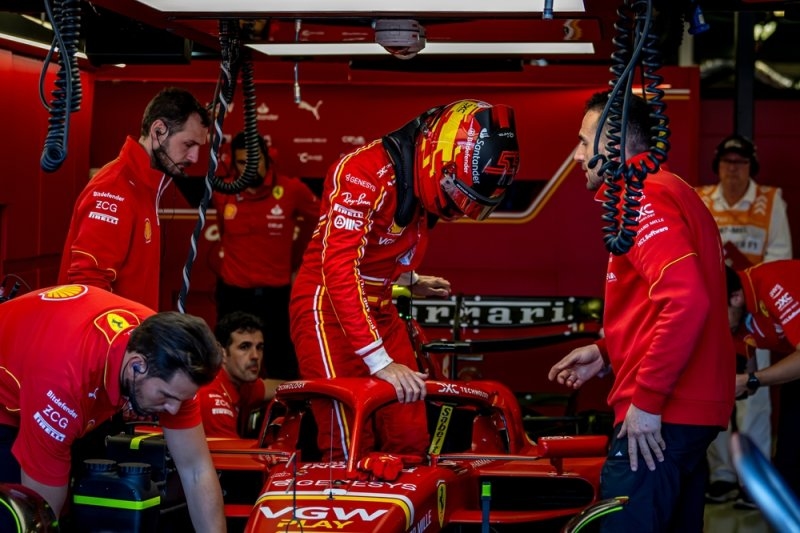
- F1 driver gear isn’t just flashy racing clothes - it's a full-blown safety system.
- Every piece, from the helmet down to the boots, is made to protect drivers from fire, impacts, and debris while letting them move freely and comfortably.
- If you’re checking out racing gear, go for stuff that’s FIA-approved: helmets, gloves, boots, suits, and head restraints.
- Fire protection is one of the biggest reasons drivers layer up with suits, underwear, balaclavas, gloves, and boots.
- And don’t assume regular motorsport gear is good enough - FIA standards are stricter.
Driving an F1 car at over 200 mph is tough enough; making mistakes at that speed is serious. But staying safe isn’t just about the car itself - what drivers wear matters just as much. Underneath those team colors, F1 gear keeps them safe from fire, heat, impacts, and flying debris, all while making sure they aren’t weighed down or restricted.
Over time, Formula One (F1) Equipment has really evolved. Now you’ve got lightweight carbon-fiber helmets, flame-resistant suits and underwear, specialized gloves and boots, and the HANS device to protect their necks. Some gloves even have biometric sensors to send medical data straight to the pit crew. So, what makes up the complete F1 driver gear? From the helmet to the racing shoes, here's the F1 driver equipment list: here's everything that counts and why nothing’s just for show.
What’s on an F1 Driver’s Gear List?
Every F1 driver heads to the track with a kit designed for performance and safety. Here’s what’s inside:
- Full-face helmet
- HANS device (Head and Neck Support)
- Fire-resistant race suit
- Fire-resistant underwear
- Balaclava
- Racing gloves (with biometric sensors)
- Racing boots
- Tear-off visor films
Together, these pieces create a safety net. Everything must pass FIA regulations — they keep lists of approved helmets and gear.
F1 Helmets
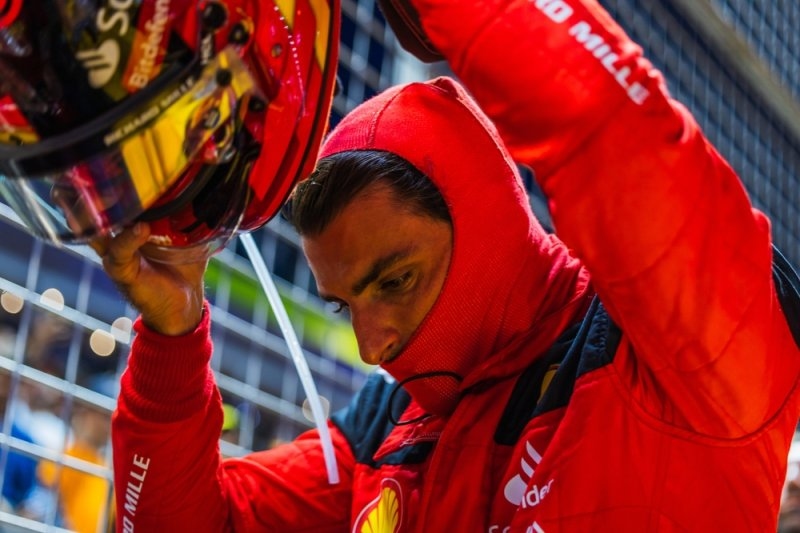
The helmet is one of the most crucial parts of the driver's protective gear, as it serves to protect the head against any impacts as well as protect the driver from fire and any debris.
The modern F1 helmets are constructed out of lightweight but durable materials, including carbon fiber technology. They are customized according to the driver to guarantee maximum comfort while racing.
Carbon Fiber Helmet Structure
Modern F1 helmets have a hard shell constructed from carbon fiber and special fireproof padding. They are customized based on the unique head measurements of the drivers. An F1 helmet cannot be used on the circuit without passing all necessary tests for impact resistance and fire resistance.
What Makes an F1 Helmet Such a Protective Device?
- Impact resistance: Multiple layers offer protection from impact forces that are absorbed and distributed among several layers.
- Fire resistance: Specific materials protect from fire and heat conditions.
- Protection offered by the visor: It offers wide visibility and also protects from particles that fly in the air.
- Fitting: Helmets are specifically designed for perfect fitting on your head.
- Testing: Before putting them into use, F1 helmets must pass many safety tests.
What Helmets Do F1 Drivers Use?
As for brands? They vary, but it’s the FIA approval that counts, not the logo. The helmet should meet certain requirements concerning impact resistance, penetration, fire protection, and retention ability. It does not matter which manufacturer produced the helmet since the important thing is that it meets the FIA safety requirements.
Must Read: The F1 Helmet Ultimate Guide: Types, Brands, and Tips for Choosing the Right Helmet
F1 Racing Suits
The F1 racing suit is mainly designed for protecting drivers against fire and high temperatures. Fire hazards might pose significant danger to the driver after an accident, especially in case of ignition of fuels and other materials.
The suit consists of fire-resistant materials and is lightweight and flexible to ensure that the driver has full control of the car.
The suit is also equipped with features that may prove useful in an emergency situation. The built-in shoulder straps, for instance, enable rescue personnel to assist in lifting out or removing the driver from the car.
Fire-Resistant Underwear and Balaclavas
The drivers wear several layers of clothing under their suits as an additional measure to protect themselves from heat and fire.
These include:
- Fire-resistant underwear: Long-sleeve shirts and pants serve as yet another layer of protection.
- Balaclava: This helps protect the head and neck region of the driver beneath the helmet.
- Fireproof socks: They help protect the legs and feet.
- Other protective layers: They will help offer protection in other exposed regions as well as handling heat and humidity in the cockpit.
The protective layers work together with the racing suit.
F1 Gloves
F1 gloves have to take into account the issues of protection, dexterity, and sensitivity. Gloves should not be too thick because drivers work with their hands constantly to control and adjust their steering wheels.
Features of modern racing gloves include:
- Protection from heat and fire
- Ability to get a good grip of the steering wheel
- Flexibility to work with controls
- Lightweight design for enhanced sensitivity
- Biometric sensors embedded in certified gloves
The implementation of biometric sensors made gloves more than just protective gear. Gloves started to provide valuable medical data about a driver, such as heart rate and blood oxygen level.
F1 Racing Boots
It is necessary for the drivers to feel every interaction with the pedals, which makes footwear a key component of their outfit.
The F1 shoes are lightweight with thin and special sole designs, which offer both grip and pedal sensitivity so as to make precise movements while braking, accelerating, and clutch operation.
At the same time, these shoes protect the drivers from fire and the hot surface of the car and also restrict unwanted movement within the cockpit.
HANS Device and Head Protection
The Head and Neck Support (HANS) device is designed to reduce potentially serious head and neck movement during a crash.
It works as part of a larger restraint system, interacting with the driver's helmet and seat belts. During a major impact, the device helps limit excessive forward movement of the head and reduces the forces placed on the neck.
The HANS device demonstrates an important principle of F1 safety: individual pieces of equipment are most effective when they work together as a complete protection system.
F1 Visors and Tear-Offs
Good vision is very important when driving at such high speeds. Visors in Formula One helmets not only provide protection to the eyes of the driver but also help him see the track clearly.
Tear-offs are another option that can be used over the visor by the drivers. In case any of the outer layers become dirty due to dust, rubber, bugs, etc., the driver can peel off this layer and get access to a clean layer underneath.
It is a very useful system for drivers, as they would not have to enter the pits just for cleaning their visor.
How Has F1 Driver Equipment Evolved?
The equipment worn by F1 drivers has seen many changes through the years. Previously, F1 drivers used basic helmets, leather shoes, and protective clothing.
However, modern-day drivers use a set of special equipment built around protecting against crashes, fires, performance needs, and comfort.
These items include:
- Protective helmets
- Racing suits made to resist fire
- Undergarments and balaclavas made to resist fire
- Specialized gloves
- Racing boots
- Head-and-neck support system
- Visors and tear-offs
Each item has its function, and all together form layers of protection between the driver and the dangers of F1 races. This way, modern-day equipment provides the driver with safety and allows him to compete in the conditions required for modern-day F1.
Must Read: Understanding F1 Safety Gear: From Helmets To Harnesses
Conclusion
F1 gear, or Formula One (F1) equipment, isn’t just a collection of accessories. It’s a safety system, and every part has a purpose: helmets for the head, HANS to protect necks, race suits and underwear for fire resistance, gloves for grip and monitoring, and boots for pedal control. Everything has to work together and never get in the way of performance.
Once you realize this, you truly start to appreciate F1. Those helmets, suits, gloves, and boots are so much more than just cool—years of technology have been put into keeping every race driver in the air during impacts, not on the asphalt. If you’re interested in F1 lifestyle and team gear, visit us at Formula1VegasPrix.com.
Want to get beyond the speed and glitz? Keep exploring the technology, the people, and the safety innovations that make every F1 race possible.
FAQs
How Much Does F1 Driver Equipment Cost?
Costs really add up. Helmets alone are expensive since they're custom-fit and engineered to extremes. Drivers usually get their gear from teams or suppliers, and details aren’t often made public. It’s way beyond what ordinary racing gear costs.
How Long Does F1 Driver Equipment Last?
There’s no set lifespan for F1 equipment. The crews and the manufacturers are always examining and changing equipment based on damage, wear, new regulations, and driver wishes. Safety comes first, so gear gets swapped out before it fails.
Can F1 Drivers Customize Their Equipment?
Absolutely - but within tight safety limits. Custom graphics, colors, and sponsor logos are common, and suits show off team identity. But the fit, build, and FIA standards can’t be messed with.
Do F1 Drivers Wear Special Ear Protection?
Drivers get a lot of hearing protection just from their helmets and cockpit setup. They also have integrated radio gear in their helmets for team communication. The system has to balance protection, clear sound, and comfort.
Why Do F1 Drivers Need So Many Layers?
Each part of the clothing is for a specific purpose. The fireproof undertaken together, these pieces provide protection from burns to the skin; the suit provides a second layer; the balaclava covers the head and neck; and the gloves and boots protect the hands and feet. With all these pieces together, it gives maximum protection without making it impossible for a driver to move their limbs inside the car.
This content was created by AI