F1 Sprint Race Format, Rules and Timing Explained for 2026

Key Takeaways
- The F1 sprint race is a shorter, standalone event held on Saturday of select race weekends.
- F1 sprint qualifying sets the grid for the sprint only, not for Sunday's Grand Prix.
- The 2026 F1 sprint races calendar features six rounds across China, Miami, Canada, Britain, the Netherlands, and Singapore.
- Just the top eight finishers score points, with the winner collecting eight.
- Parc ferme rules kick in after sprint qualifying, locking most setup changes for the rest of the weekend.
- F1 sprint race time usually run between 30 and 35 minutes, depending on the circuit.
If you've ever tuned into a Saturday and seen full points on the line, you've caught a sprint weekend. The F1 sprint race format was built to give fans exactly that. It squeezes a short, flat-out race into Saturday, sitting alongside the usual qualifying and race day sessions. Here's how the format actually works, what the 2026 calendar looks like, and what it means for the points battle.
What is a Sprint Race in F1?
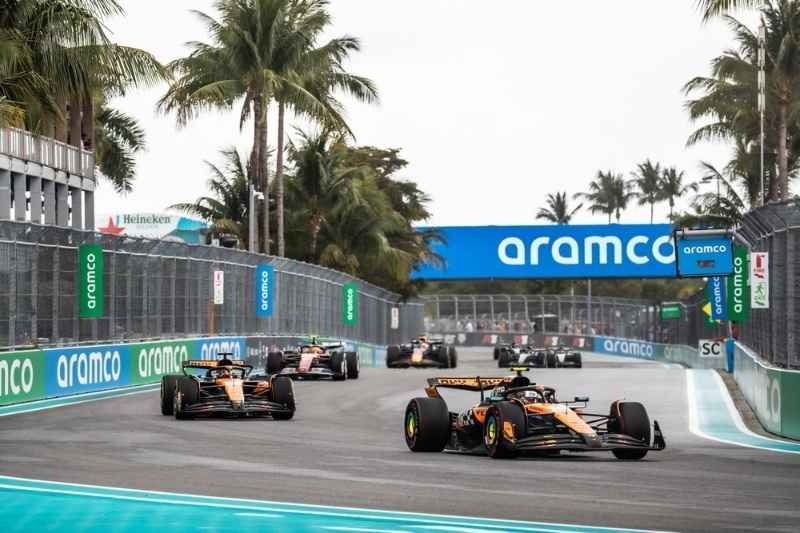
Think of it as a mini Grand Prix. A sprint race in F1 runs over roughly 100 kilometers and usually wraps up in around 30 minutes. It happens on Saturday, completely separate from the main event on Sunday. There's no mandatory pit stop either, so drivers just go for it from lights out to the flag.
How Does F1 Sprint Work?
A sprint weekend trims the usual two practice sessions down to just one, swapping the rest for extra competitive running. Friday brings a single practice hour followed by sprint qualifying, which sets Saturday's grid. The sprint itself runs Saturday, followed later that day by qualifying for Sunday's Grand Prix. It's a tight turnaround, and engineers end up working with far less data before locking in a setup.
F1 Sprint Race Time Explained
F1 sprint race time isn't fixed, since start slots shift around local broadcast windows and daylight. Most sprints run 30 to 35 minutes, covering close to 100 kilometers depending on the track. If you're planning to watch, double-check the F1 sprint race time for your region, because it changes with every round.
1. Friday Sprint Qualifying Session
Friday afternoon belongs to sprint qualifying, a quick knockout session split into three stages. It decides who starts where in Saturday's sprint, and pure one-lap pace wins the day. Teams only get one practice hour beforehand, so there's very little room to fix a bad setup call.
2. Saturday Sprint and Grand Prix Qualifying
Saturday is genuinely the busiest day of a sprint weekend, packing in two high-stakes sessions. The sprint race goes off first, then qualifying for Sunday follows later that afternoon. Sprint results bank championship points, while the separate qualifying session alone sets Sunday's actual starting grid.
F1 Sprint Qualifying Explained
F1 sprint qualifying mirrors a normal Saturday qualifying session, split into Q1, Q2 and Q3. Each stage knocks out the slowest cars until just ten remain fighting for sprint pole. Since it lands on Friday, this session gives every team its first honest look at real pace for the weekend.
2026 F1 Sprint Races Calendar
The 2026 F1 sprint races calendar brings six rounds, and it's been shuffled quite a bit since last year. China and Miami hang onto sprint status for a third straight season, while Canada, Britain, the Netherlands, and Singapore all get their first taste of a sprint weekend.
| Round | Venue | Country |
| 1 | Shanghai | China |
| 2 | Miami | United States |
| 3 | Montreal | Canada |
| 4 | Silverstone | Britain |
| 5 | Zandvoort | Netherlands |
| 6 | Marina Bay | Singapore |
These 2026 F1 sprint races land alongside sweeping technical change across the grid, which we've broken down in our guide to the F1 2026 rules.
Points and Parc Ferme Rules in F1 Sprint Race
Only the top eight finishers score points in a sprint race, not the usual top ten from a Grand Prix. The winner takes eight points, tapering down to just one for eighth place. Parc ferme rules apply the moment sprint qualifying ends, locking down most setup changes for the rest of the weekend. Break parc ferme and a team faces a grid penalty, so engineers have to commit early and live with it. These 2026 technical regulations make that early commitment an even bigger gamble this season.
| Feature | Sprint Race | Grand Prix |
| Distance | Around 100 km | Full race distance |
| Points awarded | Top 8 (8 to 1) | Top 10 (25 to 1) |
| Pit stops | Not mandatory | Mandatory |
| Sets grid for | Sprint only | Not applicable |
Pros and Cons of the F1 Sprint Race Format
1. Why Fans Love It
Sprint weekends pack points-paying action into three days instead of just one. Shorter races with no mandatory stops push drivers to attack hard right from the opening lap. That intensity tends to throw up unpredictable results, often with tighter battles than a typical Sunday Grand Prix.
2. Common Criticisms
Some argue sprint qualifying gets overshadowed, since it only sets Saturday's grid rather than Sunday's. Limited practice time also raises the odds that a bad setup call haunts a team all weekend. A few longtime fans still feel the shorter format takes something away from a single, decisive qualifying lap.
Conclusion
The F1 sprint race has settled into a permanent, if still debated, part of the calendar. It adds genuine jeopardy to Saturdays without touching the prestige of Sunday's main event. Whether you love the format or still miss the old two-practice weekend, the 2026 F1 sprint races promise plenty to watch. Understanding the sprint qualifying rules, the points split and the parc ferme restrictions just makes the whole weekend easier to follow.
Frequently Asked Questions
Does the F1 sprint race affect Sunday's Grand Prix starting grid?
Not directly. The sprint's result only counts for points and bragging rights. Sunday's grid comes from a separate qualifying session later on Saturday, so a bad sprint doesn't necessarily wreck your Grand Prix start.
Can teams change car setup after F1 sprint qualifying ends?
Barely. Once sprint qualifying wraps up, parc ferme rules lock the car down almost completely. Engineers get a bit of wiggle room on tyre pressures and wing angles, but everything major has to stay put until Sunday.
How many laps does a typical F1 sprint race cover?
There's no fixed number, honestly. Since the race targets around 100 kilometers rather than a lap count, it shifts by track. A short circuit like Zandvoort needs more laps than something longer like Silverstone.
Is tyre strategy different in an F1 sprint race compared to a Grand Prix?
Quite a bit, yes. With no mandatory pit stop, most drivers just stick to one compound and run it the whole way. It becomes more about track position and raw pace than the usual tyre chess match.
What happens if a driver crashes during F1 sprint qualifying?
It's rough, but it happens. A crash there usually means starting the sprint from near the back. Worse still, the garage has very little time to fix damage before the sprint gets underway.
This content was created by AI