F1 Power Unit Components: Every 2026 Driver's Usage Guide

The F1 Power Unit is one of the most talked-about parts of any Formula 1 season. Every team battles a strict cap on components, and going over that limit brings grid penalties nobody wants. As the 2026 season rolls past its midpoint, fans are watching closely to see which drivers are pushing their Formula 1 Power Unit allocation to the edge.
Key Takeaways
- Each driver gets a fixed allocation of ICE, MGU-K, Turbocharger, Energy Store, Control Electronics, and Exhaust parts.
- The 2026 rules allow four ICEs and Turbochargers, three MGU-Ks, ES, and CE units, plus four exhaust sets per driver.
- One unit in each category counts as a "bonus" part under the new 2026 regulations.
- Exceeding the limit triggers a 10-place grid penalty for the first offense, then five places for each one after.
- From 2027, the allocation will shrink further, making the F1 Engine cap even tighter for teams.
What is an F1 Power Unit?
An F1 Engine isn’t really just one part; it’s more like a combined system of six pieces that kind of work together. In it, you have the Internal Combustion Engine, the Motor Generator Unit-Kinetic, the Turbocharger, the Energy Store, Control Electronics, and the Exhaust. Altogether, these parts form the complete power unit package that every team depends on for performance.
Understanding this breakdown matters because each part has its own usage cap. A driver can stay within one limit while blowing past another entirely.
How Many F1 Engine Components Can a Driver Use?
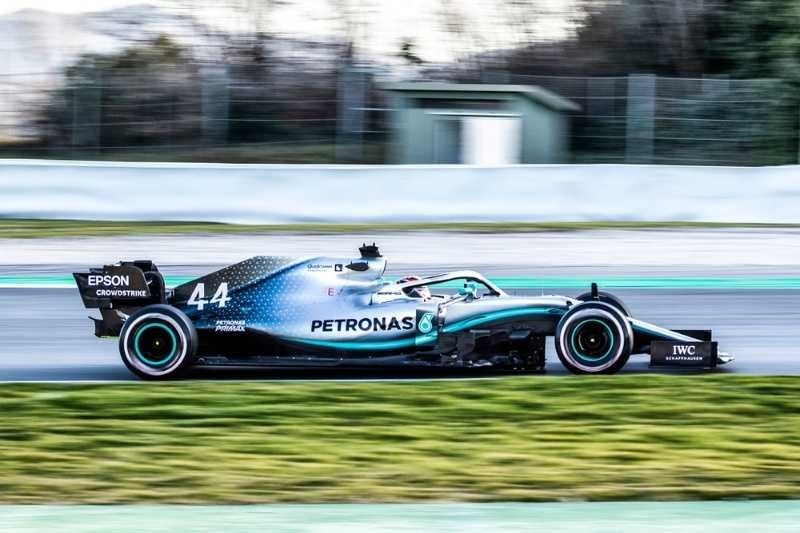
Over the 2026 season, drivers are permitted no more than four ICEs and Turbochargers, three MGU-Ks, Energy Stores, and Control Electronics, along with four Exhaust sets. That sounds generous, but with 24 races on the calendar, wear adds up fast.
One unit in each of these allocations counts as a bonus part under the new 2026 regulations, giving teams slightly more breathing room this year than next.
Starting from 2027, that cushion disappears. The cap drops to three ICEs and Turbochargers, two MGU-Ks, Energy Stores, and Control Electronics, plus three Exhaust sets. Teams are already planning for that tighter squeeze.
Also Read: Five Famous Japanese Grand Prix Battles in F1 History
F1 Engine Penalties Explained
Nobody enjoys watching a strong car start from the back. But that's exactly what happens when component limits get broken.
A grid place penalty applies at the first event in which a driver uses an extra element beyond their allowance. The scale works like this:
| Offense | Penalty |
| First time over the limit | 10-place grid drop |
| Each additional time | 5-place grid drop |
| Combined penalties on the same weekend | Applied cumulatively |
| Total exceeds 15 places | Start from the back of the grid |
The first breach of any single element brings a 10-place grid penalty, and every repeat after that costs five more places, with all penalties from the same event stacking together. If the combined penalty exceeds 15 grid places, the driver simply starts at the back, regardless of the math.
This system rewards careful engine management. Teams that plan swaps around low-impact races usually avoid the worst outcomes.
F1 Drivers 2026: Power Unit Usage So Far
By the time Friday practice wrapped for the Austrian Grand Prix, the picture across the grid looked mixed. Some drivers were still well within their limits. Others were already flirting with trouble.
Here's a snapshot of where things stood, covering ICE, Turbocharger, and MGU-K usage:
| Driver | Team | ICE | TC |
| Max Verstappen | Red Bull-Ford | 2 | 2 |
| Isack Hadjar | Red Bull-Ford | 4 | 4 |
| Lando Norris | McLaren-Mercedes | 2 | 2 |
| Oscar Piastri | McLaren-Mercedes | 2 | 2 |
| Charles Leclerc | Ferrari | 3 | 3 |
| Lewis Hamilton | Ferrari | 3 | 3 |
| Fernando Alonso | Aston Martin-Honda | 3 | 3 |
| George Russell | Mercedes | 3 | 3 |
Hadjar and Alonso stand out here. Hadjar had already used his full four-ICE allocation, and Alonso had gone one over his MGU-K limit. Both situations point toward penalties later in the season unless their teams manage remaining swaps carefully.
Verstappen and Piastri, by contrast, were sitting comfortably. That kind of conservative usage often becomes an advantage once the back half of the calendar arrives.
F1 Engine Components Breakdown
Looking only at ICE and Turbocharger numbers doesn't tell the whole story. Energy Store and Control Electronics swaps can trigger penalties just as easily.
F1 power units often become a talking point as seasons develop, especially once restrictions on component usage start biting, and grid penalties get handed out. That's exactly what's unfolding through the 2026 campaign.
Teams like Aston Martin and Audi have shown wider spreads across categories, suggesting reliability questions that go beyond a single weak component. Fans tracking these numbers should watch every category, not just the headline engine count.
For more background on how the sport's technical rules evolved this year, this breakdown of the F1 2026 tech regulations is worth a read, alongside this explainer on the new F1 2026 rules covering aero and overtaking changes.
Final Thoughts
The F1 Power Unit race-within-the-race rarely gets the spotlight it deserves. Yet it shapes grid positions just as much as raw pace does. With several drivers already testing their limits, the back half of 2026 promises more penalty drama before the checkered flag falls on the season.
FAQs
What counts as an F1 Power Unit component?
An F1 Power Unit is made up of six parts: ICE, MGU-K, Turbocharger, Energy Store, Control Electronics, and Exhaust. Each one has its own usage limit, closely tracked by teams throughout the season.
How many engines can an F1 driver use in 2026?
In 2026, every driver is allowed four ICEs and Turbochargers, three MGU-Ks, Energy Stores, and Control Electronics, plus four Exhaust sets. One unit in each category also counts as an extra bonus part.
What happens if a driver exceeds their power unit limit?
Going over the limit brings a 10-place grid penalty the first time, then five places for every repeat. Penalties from that weekend stack, and anything past 15 places sends a driver to the back.
Will power unit limits change after 2026?
Yes, the allocations shrink from 2027 onward: three ICEs and Turbochargers, two MGU-Ks, Energy Stores, and Control Electronics, plus three Exhaust sets. That means the current cushion for teams gets tighter fairly quickly.
Why do some drivers use more components than others?
Reliability problems, crash damage, or an upgrade installation during the season can force early component changes, which push some drivers toward their allowance limits sooner, even if they did nothing wrong.
This content was created by AI