Fastest Car in F1 History and Why Formula 1 Cars Dominate?
Within the scope of motor racing, the Formula 1 car is still record-holding when it comes to the sheer amount of engineering that is invested into one vehicle. Every year, a new team takes on a great task and is determined to build the most up-to-date F1 car with the best technology, super-modern composites, and extra-fast hybrid engines possible.
It is common in the world of F1 racing for fans to ask how fast F1 cars can be driven. The answer to this depends on conditions (track, weather, etc.) and on the suspension setup. Modern F1 cars can, however, reach speeds in excess of 230 mph and still achieve excellent corner grip.
Fastest F1 Car and the Speeds it Can Achieve
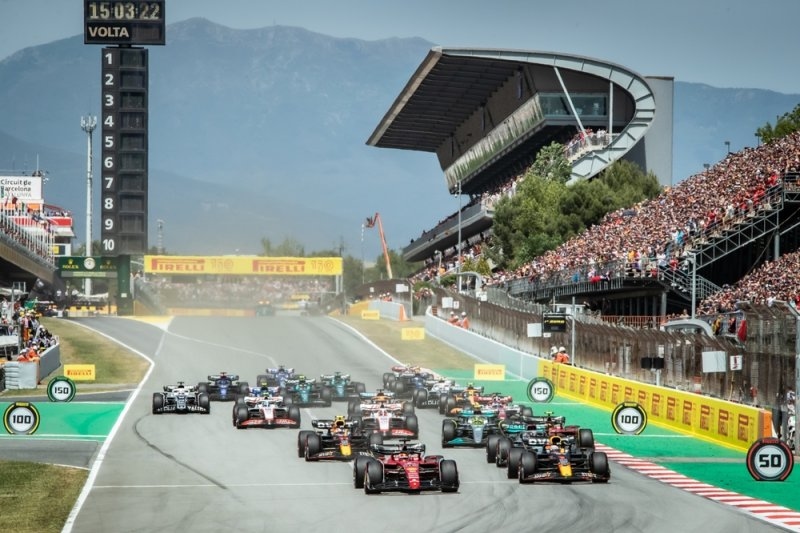
A modern F1 car, currently under racing conditions, can reach spectacular speeds on straight circuits. During races, Formula 1 cars reach top speeds regularly exceeding 210 mph, whereas in race events that are particularly constructed for speed and agility, namely Mexico City or Monza, drivers can accelerate to above 230 mph at an ideal performance.
Racing fans constantly question the fastest car in F1 and fast F1 cars because, each year, different engineers push the technology in Formula 1 to its very limit. However, speed does play a role in Formula 1 cars' capability to cover a lap faster than any other racing vehicle due to the whole package of speed, cornering, braking, and tires.
What Makes the Fastest F1 Car So Special?
There are many different contributing factors involved in constructing the quickest F1 car, and arguably one of the most influential is the design process of engineering. Teams invest countless millions designing each minute aspect, as it is important in producing a fast F1 car, which could make an overall difference in the outcome of the race.
Modern Formula 1 cars make use of hybrid power units that fuse with each other with an electric motor to power the engine, which produces approximately 1000 hp while simultaneously remaining efficient. Engineers in Formula 1 have heavily prioritized making the car weigh as little as possible to produce faster performance by utilizing carbon fiber to make up the majority of the chassis, an element that makes the car structurally strong yet extremely light.
The next element that explains why the highest-speed F1 car excels is through balance. Each F1 car must be balanced to be able to handle the extremely competitive racing environment by adjusting its suspension, aerodynamics, brakes, and tire pressures.
Here's Something Helpful: Making F1 Successful in Asia: Challenges & Solutions
Aerodynamics and Why They Matter
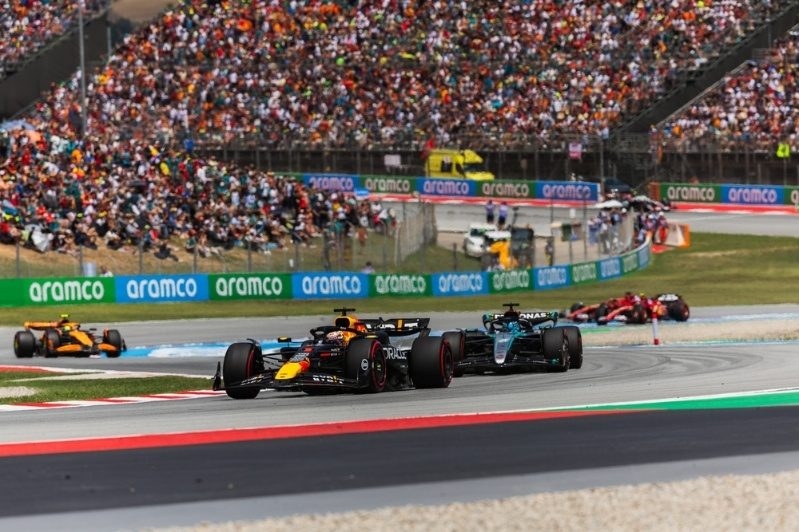
Aerodynamics are arguably one of the most influential aspects of performance in Formula 1. In an F1 car, every panel and vent has a shape to manage air flow around the car, which allows more downforce, which pushes the F1 car onto the ground, which creates more grip, which allows higher speeds during cornering; F1 cars can be driven extremely fast during corners, while most sports cars must reduce speed greatly before going around a corner. The fastest F1 cars are usually produced by teams that optimize aerodynamic characteristics to produce enough downforce in order to corner extremely fast, yet not add too much drag.
How Fast Do F1 Cars Go?

Many Formula 1 cars are often compared to NASCAR or even Indy cars, but when you evaluate all-around performance, there is no racing car that rivals a Formula 1 car. Drivers take 2.5 seconds to accelerate from 0-60 mph, and the car can brake a whole lot quicker than most sports cars. It's not hard to see why Formula 1 races achieve over 200 mph due to F1 cars being able to perform better in cornering speeds compared to sports cars.
Regarding the fastest cars in F1 and sports cars, they may reach close speeds; however, in Formula 1, the driving forces that carry out extremely high speeds in Formula 1 are many, and they all work as a combination when it comes to overall speed.
Fastest F1 Car Ever in Formula 1 History
There are often arguments about the fastest F1 car ever; it is quite tough to compare. Some old Formula 1 cars have been faster, but at the same time, the modern cars have made huge strides in technological advancement. We have all seen that both Michael Schumacher's Ferraris and Mercedes' recent hybrid cars have been at their best, breaking record after record around most of the racing circuits.
Engine Technology Behind the Highest Speed F1 Car
Modern Formula 1 cars contain a V6 hybrid 1.6-liter turbo engine, and that may seem like an ordinary engine to any average sports car driver, but with the advancement in engineering, this F1 engine can produce a mind-blowing 1000 bhp, and not only is it powerful, but it is also efficient.
Energy recovery systems retrieve energy from F1 brakes and heat, which is transferred back to the engine, allowing the F1 car to achieve a very rapid speed during overtaking and in qualifying to produce an even greater top speed. This is the reasoning behind the continued questions about the speed of an F1 car.
Tires and Grip Help Create the Fastest F1 Car
F1 tires are specially developed to improve overall cornering speed and allow drivers to get the best from acceleration. F1 drivers utilize many different tire compounds in order to increase cornering speed. Soft compounds generally provide more grip, while hard compounds offer a longer lifespan but perhaps less grip.
Teams focus on controlling tire temperatures and tire wear, as this plays an important role in the outcome of any Formula 1 race.
Drivers are Just as Important as Technology
Ultimately without the driver, Formula 1 wouldn't be as special. Drivers have been trained to be the best of the best in terms of reflexes, concentration, and physical fitness; to be able to drive a Formula 1 car at 200 mph and be in a battle on a racing circuit requires extremely special driving abilities. Drivers can achieve a higher corner speed and drive more efficiently by maintaining concentration and physical condition.
Conclusion
The quickest Formula 1 car ever manufactured comes down to a perfect blend of engineering, aerodynamics, hybrid power systems, and driver talent; the quickest cars can achieve speeds up to 230 mph and accelerate quicker than any other vehicle on this planet. F1 is always progressing with its cutting-edge technology to give you more exciting race weekends, which allow you to question how fast F1 cars go and have an insight into their incredible speed.
Frequently Asked Questions
How fast can a Formula 1 car go?
A modern Formula 1 car can reach speeds in excess of 230 mph under the right circumstances. Its top speed is affected by the nature of the track on which it is raced, the aerodynamics fitted, and also the weather conditions and tire performance over the course of the race weekend.
Why are Formula 1 cars so quick in the corners?
Formula 1 cars produce vast amounts of downforce through their aerodynamic design, which pushes the car into the ground, therefore enabling the car to corner very rapidly, at speeds that any ordinary sports car can possibly attain.
Which team has produced the fastest F1 car ever?
The cars produced by Ferrari in the early 2000s and, in particular, their hybrid-era rivals constructed by Mercedes, are often cited as being the quickest F1 cars ever, while cars from Red Bull Racing have recently exhibited tremendous speed and control.
How much horsepower does a Formula 1 car generate?
A modern Formula 1 hybrid engine generates approximately 1000 hp with the use of its turbocharged engine combined with the electrical energy recovery systems.
This content was created by AI