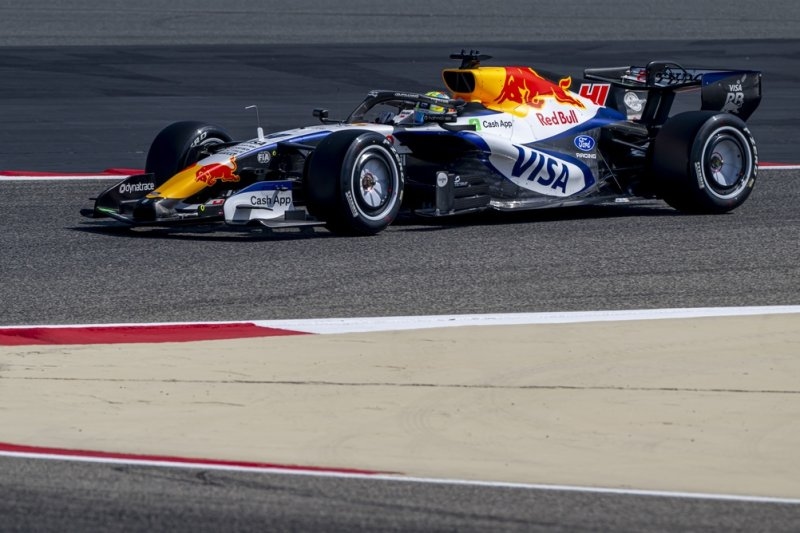
Formula 1 Pedals Explained: Mastering Speed and Control

-1715755693-r.jpg)
Key Takeaways
- In current Formula One automobiles, there is a two-pedal system where the driver can control the throttle and brake with accelerator and brake pedals, while the clutch is controlled via paddles placed behind the steering wheel.
- The pedals are designed to provide accuracy, quick response, and ease of use for the driver, employing light materials and adjustable placement.
- The pedals are integrated with electronics and regeneration systems to enhance driving dynamics.
Formula One racing is one of those areas where precision engineering and fierce competition are combined in their utmost form. There, all elements of the car are vital for its proper functioning. And the pedals are an important element that allows the driver to interact directly with the car. Such kind of connectivity is important because it enables the driver to control the movement of the car through mechanical means.
Evolution and Historical Context
The development of the Formula 1 pedals through decades shows major improvements and changes in technology as well as the way Formula 1 cars are adapted to the racing requirements. Originally, F1 cars used to have three pedals just like ordinary cars. However, in the 1950s, an important shift took place.
In modern times, F1 cars use two pedals thanks to the introduction of semi-automatic gearboxes.
Technical Specifications and Design
The working mechanism of Formula 1 pedals is a marvel of current technology and material science. Usually, the pedals are made from light but durable materials such as carbon fiber to ensure that they are very light in weight while being able to resist high loads. Drive-by-wire systems used instead of mechanical connections help achieve a faster reaction from the car to driver actions.
In addition, each pedal system is customized according to the ergonomic needs of each driver to maximize comfort and performance.
Adjustments can be made in terms of the pedal height, spacing, and angle to optimize the driver's control of the car. This is supported by the accuracy of timing in Formula 1 racing, which helps fine-tune performance.
Functionality and Dynamics
In modern Formula 1 cars, the pedal operation is reduced to having only the accelerator and brake pedals with no clutch pedal. The clutch system, however, is controlled using paddles placed behind the steering wheel and used mainly when starting or when manual control is needed. This arrangement not only eases the driver's work but also helps to improve lap times.
Also, the inclusion of regenerative braking systems demonstrates the innovative nature of Formula 1 engineering. Regenerative braking systems help collect kinetic energy generated when the car brakes and convert it into electrical energy that can be utilized to increase the speed of the car.
A precise interplay between the aforementioned pedal systems and other mechanical and electric components of the vehicle is an essential element for the efficient performance of the automobile at the race. Pressing and releasing the pedal in a race is a deliberate action taken to take advantage of the speed or to control the momentum.
A detailed knowledge of the principles underlying Formula 1 pedal systems and their evolution will enable us to understand how technology has evolved in this sport. This process is vital for defining results in Formula 1 races and developing technology for it.
Driver Interaction and Techniques
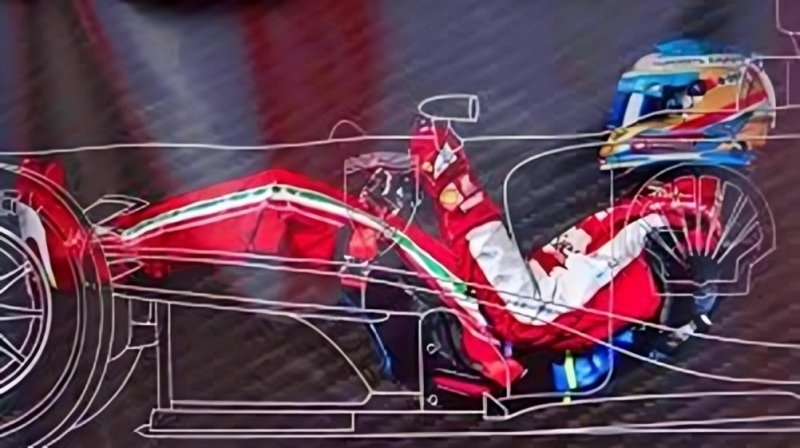
Image Source: Las Motor Sports
The Formula 1 pedals are very intricate in their design and play an essential role in helping the driver to control the car effectively under the extreme racing environment. One of the important methods enabled by the use of such pedals in modern cars is the use of the left-foot braking technique. Under this process, the driver brakes using his left foot instead of the right foot that was traditionally used for this purpose. The method ensures a faster transition between the pedals and enhances the ability of the driver to manage the car's speed in corners.
Pedal spacing and sensitivity help to achieve the technique that will result in reduced lap time by the driver due to increased control of the car's braking and acceleration.
Apart from the use of such features in the pedals, it is also vital to consider how they interact with other car systems, such as the Electronic Control Unit (ECU) and powertrain management systems. These two systems should help interpret the pedal input and perform mechanical and electronic functions according to it.
Safety Features and Regulations
Pedal Safety in Formula 1 is a vital issue that requires compliance with strict safety requirements established by the Fédération Internationale de l'Automobile (FIA). It should be noted that, apart from the technical requirements that should be satisfied by the pedals, there are also special safety rules that should be met.
Thus, for example, the pedals must have the ability to detach themselves from the car rapidly in order to enable the driver to leave the car swiftly and easily. The choice of materials such as carbon fiber is explained by the fact that they possess excellent strength-to-weight ratios and can either yield or detach when an impact takes place. Moreover, it is worth mentioning the dietary needs that fuel F1 drivers.
Comparative Analysis
The differences between Formula 1 pedals and the pedals used in other types of motorsport are considerable since each race requires special treatment and special devices. The following are some of the differences between the pedal systems used in Formula 1 and in other forms of motorsport like IndyCar racing and endurance racing.
Whereas F1 pedals are engineered to be responsive and precise, pedals in endurance racing cars are meant to have durability and performance for longer periods of time. IndyCar pedals, in turn, are engineered to combine a responsive nature and comfort since IndyCar races are shorter than endurance racing and thus require precision and adaptability.
Endurance racing involves designing pedals in a way that would make them withstand all the wear and tear associated with longer use. This is different from the lightweight and very responsive nature of F1 pedals.
Looking Ahead
It would be impossible to underestimate the importance of pedals in Formula One racing. In their capacity as the interface between the driver and the car, pedals play an important part in turning driving ability and tactics into performance on the race track.
The continued development of pedals through the continuous progress of technology and the deep knowledge of aerodynamics, vehicle dynamics, and human factors engineering contributes greatly to both race results and the future of the sport. The unceasing search for perfection in the area of pedal design clearly shows how competitive and complex the sport of Formula One is.
FAQs
1. Why do F1 cars have only two pedals?
In modern F1 cars, there are accelerator and brake pedals since there is no need for a clutch pedal owing to the use of semi-automatic gearboxes. The clutch is engaged using paddles that are placed behind the steering wheel, especially during race starts and other manual operations.
2. What materials are used to manufacture F1 pedals?
F1 pedals are normally made from light and strong materials like carbon fiber. These materials are necessary for providing strength under tough racing conditions, as well as reducing unnecessary weight within the cockpit.
3. Do F1 drivers use both feet when driving?
Indeed, F1 drivers employ left-foot braking. With this method, F1 drivers are able to change swiftly from braking to acceleration and maintain good control when going around the corners.
4. How sensitive are the pedals of a Formula 1 car?
The pedals of a Formula 1 car are highly sensitive to driver movements. These pedals have adjustable positions, distances, heights, and angles that can be personalized by each driver.
5. How do F1 pedals contribute to energy efficiency?
Brakes function alongside regeneration technology, which helps to harness some amount of energy generated by the vehicle during braking. Such energy could then be transformed into electrical energy for use in accelerating the vehicle.
This content was created by AI