F1 Flags Meanings: What Different Colors Mean in F1 Racing

Key Takeaways
- The F1 flags serve as important communication tools to provide information regarding the condition of the track, danger, penalties, and race situation.
- Different colours represent different messages, such as the green flag for a clear track and the red flag for stopping the race because of a dangerous situation.
- F1 flag comprehension enables fans to understand the tactics and decisions made during the race.
- Yellow flags warn drivers of hazards or accidents ahead, requiring them to slow down and avoid overtaking.
- Blue flags instruct slower or lapped drivers to yield and let faster cars pass without interference.
There are many different flags that appear during a Formula 1 race. Each of the various flags will indicate the driver on the track of an event that has occurred, or they could be used to instruct the drivers on how to act, such as to follow the other car.
In addition, these flags may be used to warn the drivers about hazards or track conditions. This can make it difficult for one to remember the various flags because not all are common, and hence, it is important to learn what each of the flags indicates.
Why These Flags Matter
To keep an F1 race running smoothly, there are a bunch of flags used to send messages to the drivers so they can respond appropriately. Circuit marshals, who are the unsung heroes of motor racing, are posted around the track and are the first to react if there's an accident, breakdown, or oil spill, for example.
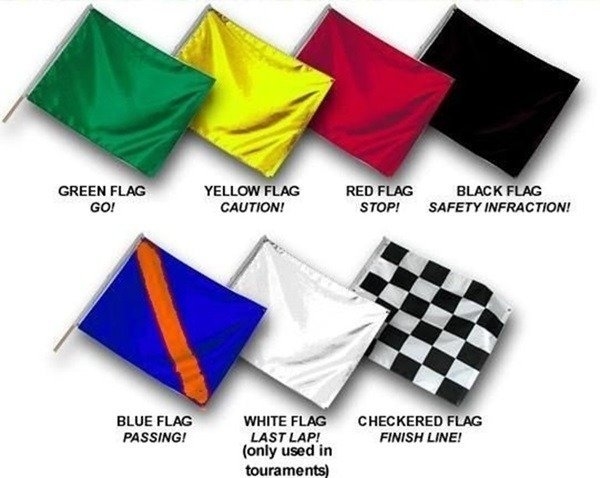
There are ten different coloured flags in Formula 1, and drivers can easily recognise them.
Chequered Flag
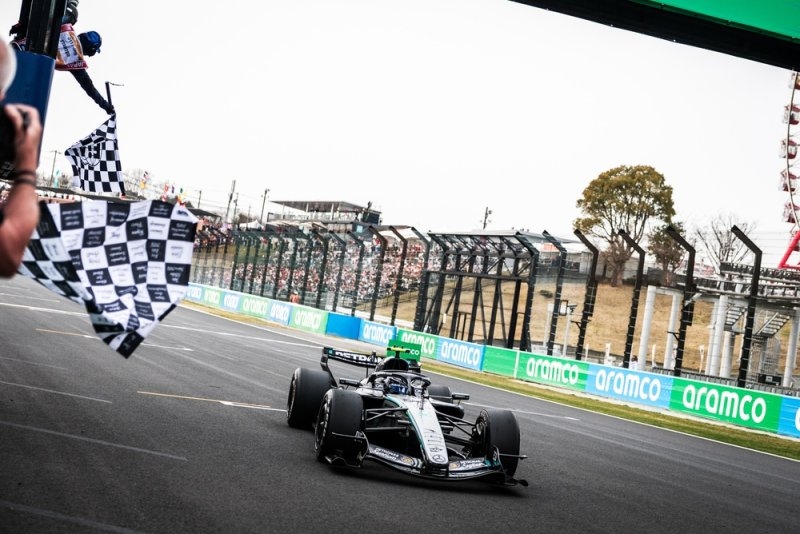
It is the flag that all people will think about whenever there is talk about racing. The chequered flag is used to indicate the finish of the race and is initially presented to the winning driver.
In most cases, an FIA member will wave the flag, but at other times it has been waved by famous personalities like David Beckham and Serena Williams.
Red Flag
When there is a red flag raised at the starting line or even any other marshalling point on the racing circuit, it simply means that the organisers have made a decision to halt the session. The reasons can be anything from an occurrence of some serious accident or adverse climatic conditions.
When it happens during the practice and qualification sessions, all the drivers must drive slowly to the pit garage. During the race, they must drive slowly to the pit lane.
Black Flag
Nowadays, the black flag is quite uncommon; however, it is presented to the offenders of the regulations or drivers who have been warned earlier. It is necessary for the driver to enter the pits and terminate his activity, similarly to receiving a red card in football.
This penalty was used the last time in the 2007 Canadian Grand Prix, where Felipe Massa and Giancarlo Fisichella received black flags for driving under red lights out of the pits. In 1969, Al Pease was disqualified from the Canadian Grand Prix for being too slow!
Blue Flag
Basically, the blue flag lets a driver know they're about to be overtaken. During the race, it's a bit different from earlier sessions. When a driver leaves the pits, it means traffic is coming.
In practice, it warns a driver that a faster car is behind and about to pass. In the race, it tells a driver they're about to get lapped. If they ignore three warnings, they get penalised.
Yellow Flag
The yellow flag indicates that something is dangerous, and it can be displayed in two forms. One waving signifies that motorists should reduce speed, can't overtake, and prepare themselves for turning since there is a risk around.
Double waving means they need to slow down a lot, can't overtake, and must be ready to change direction or stop because the track is blocked or marshals are working.
During practice and qualifying, drivers shouldn't try to set a fast lap time when the yellow flag is out—they should abandon the lap, though they don't have to pit since the track might clear up on the next lap.
'Code 60' Flag
In some cases, the Clerk of the Course or Race Director may designate a speed limit across the entire circuit or a particular portion of the track in case of double yellow flags during practice sessions, qualifications, and race times.
In case there is a speed limit for the entire track, then you will find a yellow flag combined with an FCY (Full Course Yellow) signboard or a purple flag with a white circle bearing the number 60 (Code 60).
If there's a variable speed limit, it'll show a single yellow flag and a board marked VSC (Virtual Safety Car). For a speed limit on just part of the track, the start and end will have double yellow flags and a board marked 'SLOW'.
You May Also Like: Learn the ins and outs of F1 racing with our guide to Out Laps, In Laps, and Hot Lap
Other Important Flags
Green Flag
This one is quite simple—a green flag indicates that the track is clear, be it at the beginning of a warm-up lap, a practice session, or a qualifying session, or immediately after an event that required yellow flags.
White Flag
The white flag lets you know that there's a slow vehicle moving on the track, such as a tow truck or an ambulance. This flag is also shown at the end of practice sessions when drivers usually stop on the grid for practising their starting techniques.
Yellow Flag with Red Stripes
Also called the oil flag, this warns drivers about a slippery surface ahead, usually from an oil leak. It can also warn about standing water on the track, so drivers know to slow down more than usual.
Black and White Diagonal Flag
This flag warns drivers of unsportsmanlike behaviour, like dangerous driving, overtaking under yellow flags, or going off track limits. It'll come with the driver's car number too.
Black and Orange Circle Flag
So, when a car has a mechanical issue that could be dangerous, they wave this black and orange flag (some folks call it the “meatball flag”) at the driver, along with their car number. This tells the driver to head back to the pit lane. This usually happens if there are any loose parts on the car, like the front or rear wing that might come off. If the mechanics can fix the car well enough, the driver can get back on the track.
Flag Panels
Besides the marshals showing flags at the track, there are digital light panels all around F1 circuits. These help make sure drivers get the messages clearly, whether it’s day or night or if the weather changes (check out the video above).
Similar Reads You May Enjoy: Formula One's Sparking Vehicles Phenomenon Explained
Conclusion
It is essential to be aware of the meanings of various flags in F1 racing in order to understand how the race dynamics and driver decisions play out. Every flag conveys some particular set of instructions or warns about certain problems in order to ensure the safety and fairness of the race.
Green, checkered, yellow, red, blue, and even black flags are used in F1 racing, each of them being indispensable. A green flag means that the race will begin or resume; the checkered flag marks the end of the race; the yellow flag shows the caution on the track. The red flag means that the race is stopped because of some severe conditions; the blue flag indicates that the slower car should yield to the faster one.
Being aware of the meaning of these flags adds value to the race viewing since the viewer can immediately understand what is going on at the track.
FAQs
1. What is the use of the flags in Formula 1 races?
The F1 flags are utilised to provide necessary information to the drivers during the race, practice, and qualifying sessions. They help drivers get notifications about danger, track conditions, penalties, safety, and other instructions.
2. What does a yellow flag signify in Formula 1?
The yellow flag is the signal of possible danger, such as an accident, debris, or another car standing still. The driver should drive at a low speed, not pass other cars, and be ready for changes in track conditions.
3. What is the significance of the red flag in F1?
The red flag shows that the session has been paused because of serious incidents, bad weather, and unsafe track conditions. The drivers should drive slowly to the pit lane.
4. What does the blue flag signify in F1 races?
The blue flag alerts the slower driver that a fast-approaching car is near them. Ignoring the blue flags during races by drivers leads to penalties imposed on them.
5. What is the significance of the checkered flag in Formula 1?
The checkered flag signifies the completion of a race, practice, or qualifying session in Formula 1. In a Grand Prix, the checkered flag is waved initially to the winner of the race.
This content was created by AI